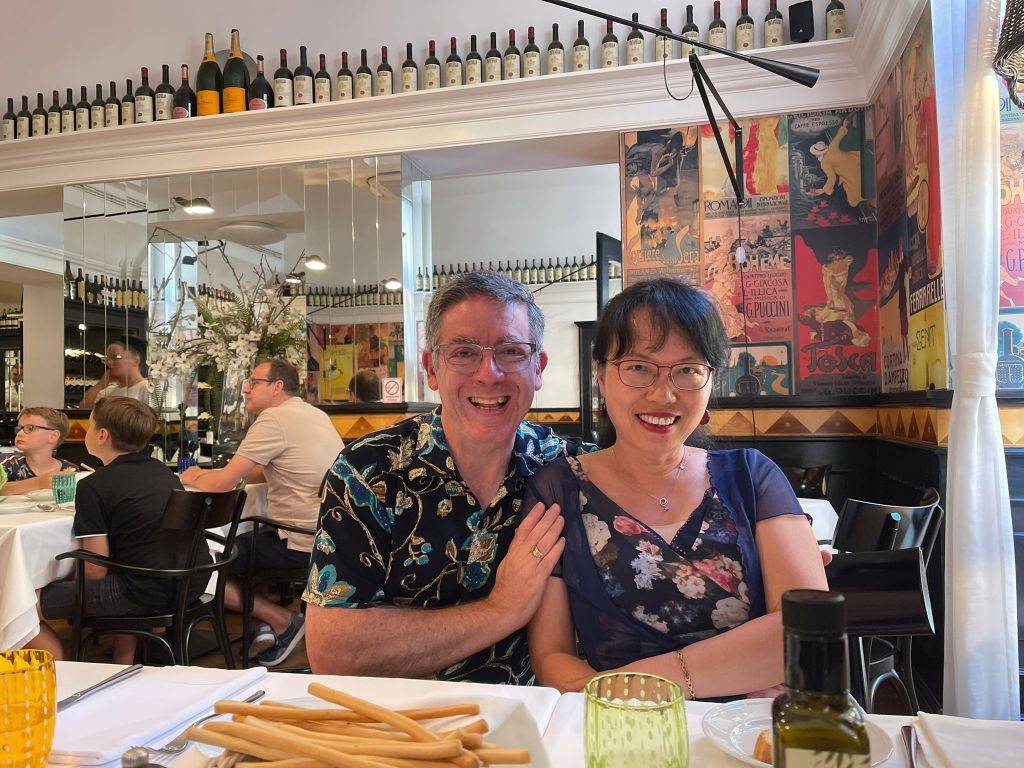
Laetitia is a lovely lady chef at Musica Mundi School whose birthday is coming up on 28 May in just two days from now. Brilliant Benjamin is a student who’s had a great school year as a 16-year-old, and we’ll have special puzzles to celebrate him turning 17 this coming Wednesday 29th. I’m hoping for more solvers like Super Seinel who submitted the best answers to the most recent puzzles that I shared at the school. She will be receiving a very nice prize pen tomorrow. 👍😊
A Starter Puzzle in Honour of Laetitia’s Birthday on 28 May 😁
Use the numbers 2, 8, 2, 8, 2 in any order you like in a calculation to get the result 28. You can use operations involving +, -, x, ÷, ( ) as you wish.
Benjamin is about to turn 17. Let’s note that 17 = 8 + 9, and 172 = 289.
A Warming-Up Puzzle in Honour of Benjamin
In how many years from now will be the next (future) time that the square of Benjamin’s age then will end with the digits 89 on the right? 👌
As Brilliant Benjamin always gave 100% top efforts in my Maths class at the school, here comes…
A Modest Brainteaser in Honour of Benjaminhere in Blog Post # 24+24+24+24+24+24+24 😍
Part 1: I’m thinking of a particular number. If I add 2400 to the number, then its square root increases by exactly 16 (compared to the square root of the original starting number).
What number was I thinking of at the start?
Part 2: I am currently 61 years old. When can be the soonest (future) time that the square of my age then would end with the digits 89 on the right? Could there be yet another such time later on? 🙌
Part 3: In Heaven, the good and joyful events will truly be infinite. As a sample taster, imagine a special feast of 289 celebrations there. Several celebrations before celebration #289, an angel announces that the square of that particular celebration number gives a number ending with the digits 89 on the right.
Given that information, and without even needing to use a calculator, deduce the exact celebration number when the angel’s announcement is made. ❤️
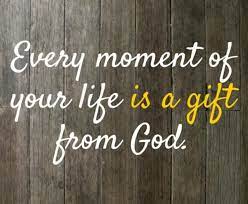
I saw this beautiful photo via the Facebook page of a friend named Antonio who posts really good and inspirational messages every day 👌💕
A Puzzle in Honour of Super Seinel 😊
Seinel’s birthday is not tomorrow! However, tomorrow it will be 41 days since her birthday, and we can still have some good Maths fun with that…!!
Think of any friend who’s less than 40 years old! Multiply their current age by the age they’ll be on their next birthday. Now add on the magic number 41.
What do you notice that’s special about all the results that can be obtained like that!?
A Nice Word Puzzle involving Seinel’s Prize Pen 👍😊
Rearrange the letters of SUPER SEINEL to make the word PENS + a proper seven-letter English word.
I wish you oodles of enjoyment with all the puzzles 😁, and please do feel free to send me your solutions by email, if you like. 👍
With kindest wishes as always,
Paul M😊twani ❤️
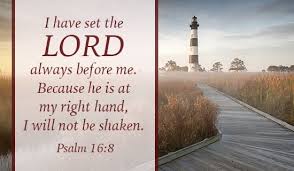
I’ll conclude this Blog Post #168 with the beautiful Bible Psalm 16:8
“I have set the LORD always before me; because He is at my right hand, I shall not be shaken.”
In the past fifty years since I was first introduced to the Royal Game of Chess at the age of 11 in Scotland, I can truly say with gratitude that I have met thousands of lovely people through the beautiful game. I still remember many of the moves that were played, but I remember the people much more!
Even if one can’t always personally let everyone know that they are very fondly thought of and remembered, there’s no better time than the present to let people know we care. 💕
This photo from 30 years ago–way back in 1994!–is one of my favourites 😍. Jenny (whom I married soon after) is pictured with Harald Fietz, Ian Grant and Jonathan Grant, whose birthday is coming up in just a few days from now 😊.Andrée Upton-Regnier’s birthday is coming soon too, A days after Jonathan Grant’s birthday…😊The birthday of Woman Chess Grandmaster Erika Sziva is also coming soon, in early June, exactly Ax3 days from today…😁
Early Birthday Puzzle in Honour of Chess Friends Jonathan Grant, Andrée Upton-Regnier & Erika Sziva ❤️
Today (May 18) is day number 139 of this year 2024. So, Jonathan’s birthday coming up will be on day number J of this year, where J is clearly greater than 139. Andrée’s birthday will be A days after Jonathan’s, where J x A = 1001. Also, Erika’s birthday will be A x 3 days from today.
Your fun puzzle is to figure out the exact dates (month & day number) of the birthdays of Jonathan, Andrée and Erika. 👍👌🙌
Some of my dear friends have passed on, but they will never be forgotten either ❤️
This photo from January 1979 includes me with great school friends Shaun, Mike P., Andrew, Gary, Tony, Mike H., Mike D. and Martin. Martin Jackson and Tony Welsh have passed on, but will always be remembered fondly ❤️A Chess photo from 1982 with dear friends Tim Upton (19.12.1958-10.1.2018) and Graham Morrison (10.11.1958-13.5.2024). Graham was Scottish Champion in 1981, and represented Scotland frequently at international level, playing in Olympiads in 1984, 1988, 2010 & 2012, and in many European Team Championships. He was also a long-standing player in the 4NCL, formerly with Barbican before moving to Alba. I had been very much looking forward to seeing Graham at the British Chess Championships this summer, as he had also signed up to take part. He was a really lovely, kind and gentle man ❤️ who will be missed greatly by all who knew him well. Sincere condolences and thoughts go to Graham’s wife, Lynne.
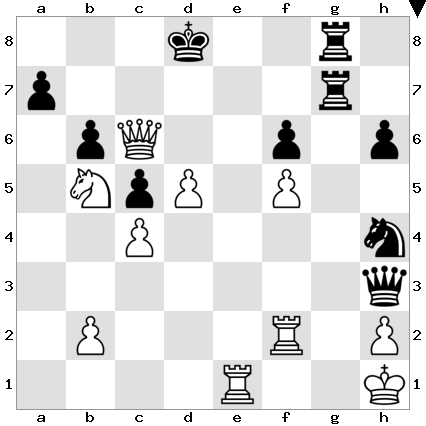
This position, with White to play and win, is based on a game of Graham’s from the 1989 Edinburgh Open, 35 years ago! Graham loved to have the bishop pair in Chess, and he frequently used it to great effect. Enjoy finding the strongest directly-winning idea, just like FIDE Master Graham Morrison did! 😍A photo with Graham Morrison in 1988 ❤️
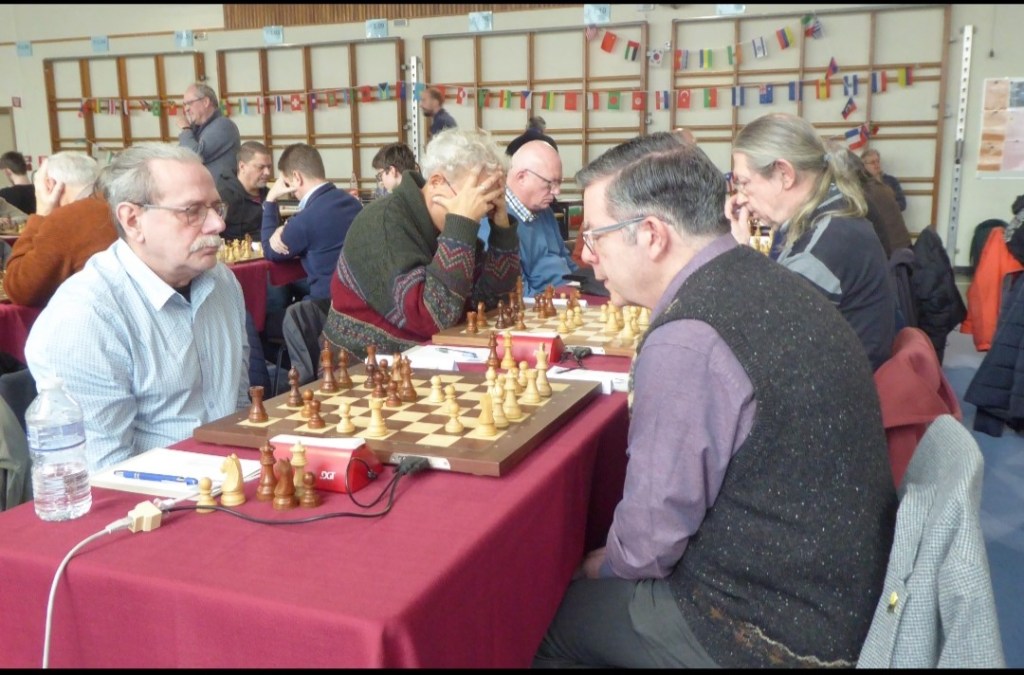
Look closely at this photo from way back in 1990… In the foreground is FIDE Master Donald Holmes playing Black against a remarkable boy who was later to become an International Grandmaster. Happy birthday wishes for tomorrow to GM Jonathan Parker! ❤️😊
Super-Fast Puzzle in Honour of Jonathan Parker 😁
What age will Jonathan be turning tomorrow (on 19.5.2024) if I tell you that then half of his life so far will have been in the 21st century, while the first half (so far) was in the 20th century?
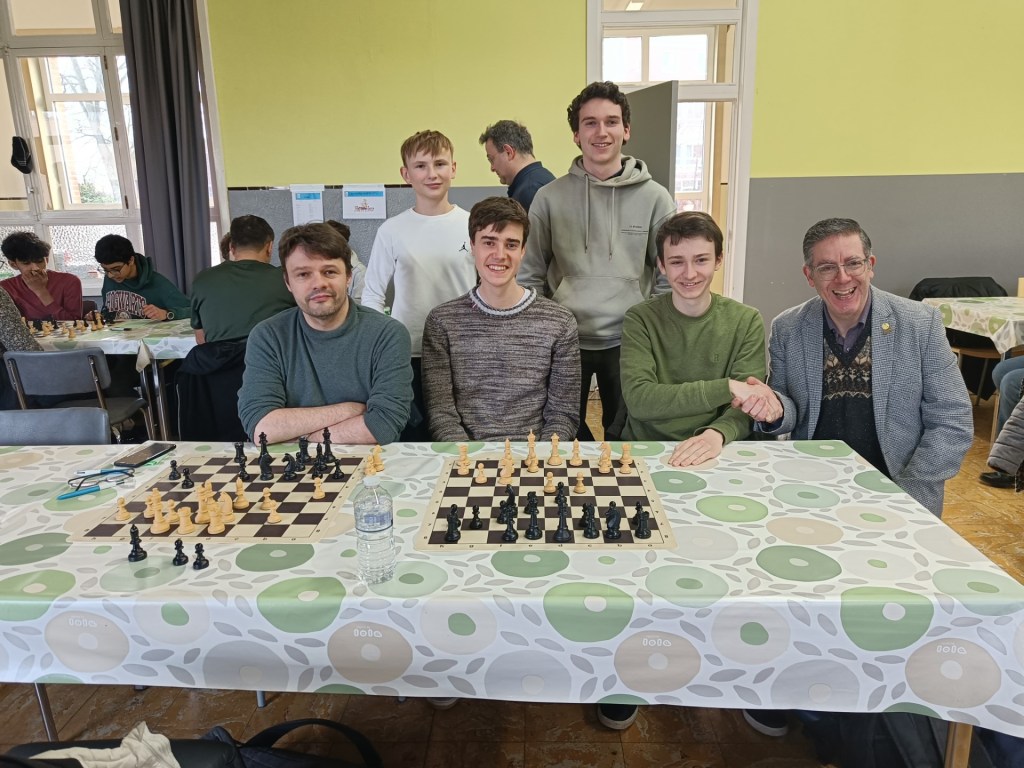
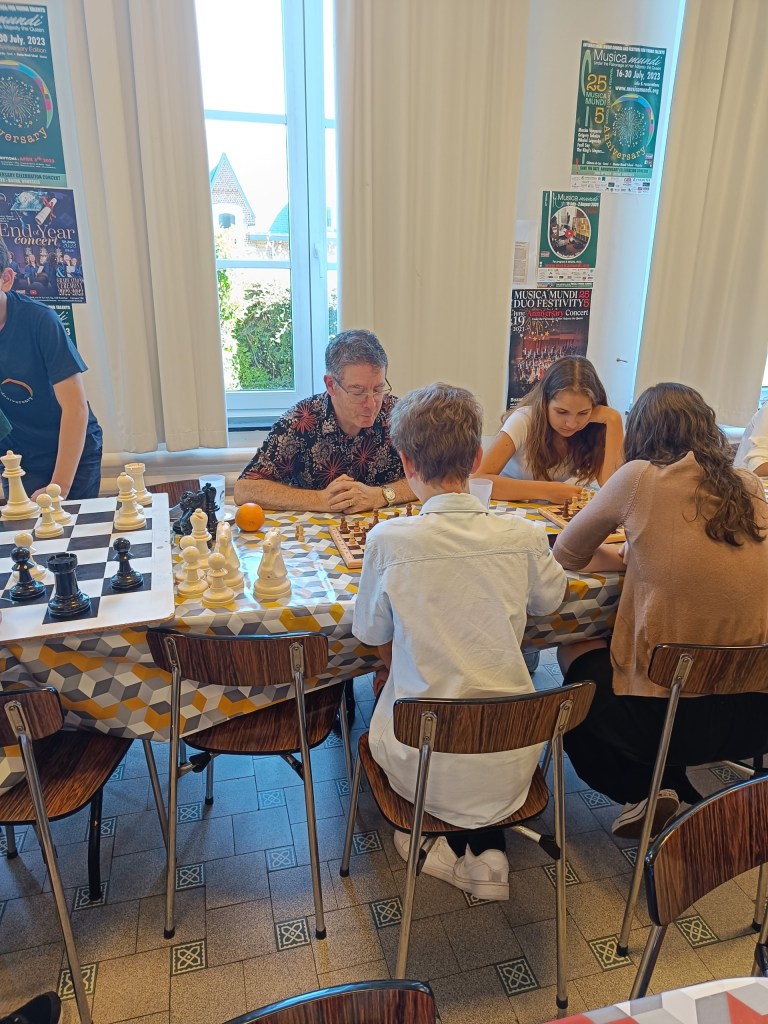
In the photo above from Musica Mundi School, the boy playing me is Aimar, and there he’s the same age that Jonathan Parker turned in 1990, a few years before he became a Chess Grandmaster…
Happy Birthday Wishes to Aimar for tomorrow, too!! ❤️😁
A fun photo at the Musica Mundi School Chess Club ❤️
Fun Puzzle for Aimar’s Birthday tomorrow (19 May) 😊
In this puzzle, we’ll make good use of several nice numbers 👍😁
We’ll use 160, the total number of Chess pieces and pawns that were on the five boards (in the photo above) at the very start of the games.
We’ll also use 10 (the number of people pictured playing), and 3 (my favourite number) and 8 (the number of letters in BIRTHDAY). Note that sqrt stands for “the square root of” in Aimar’s Birthday calculation ❤️
Calculate 3 ÷ 8 * sqrt (160*10) to verify the age that Aimar will be on his birthday tomorrow 😍
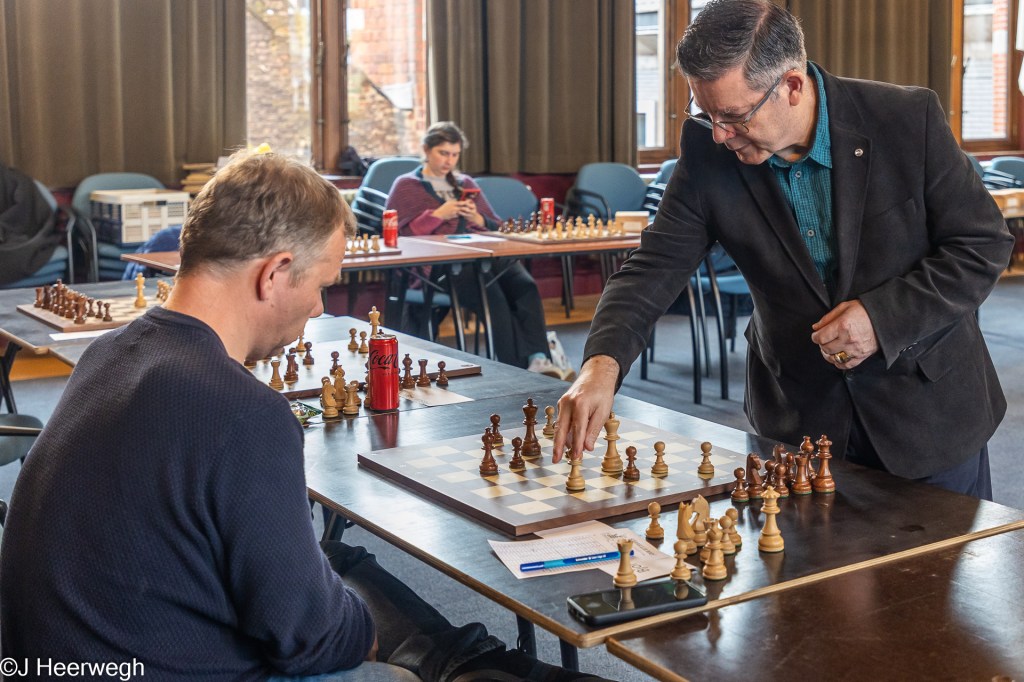
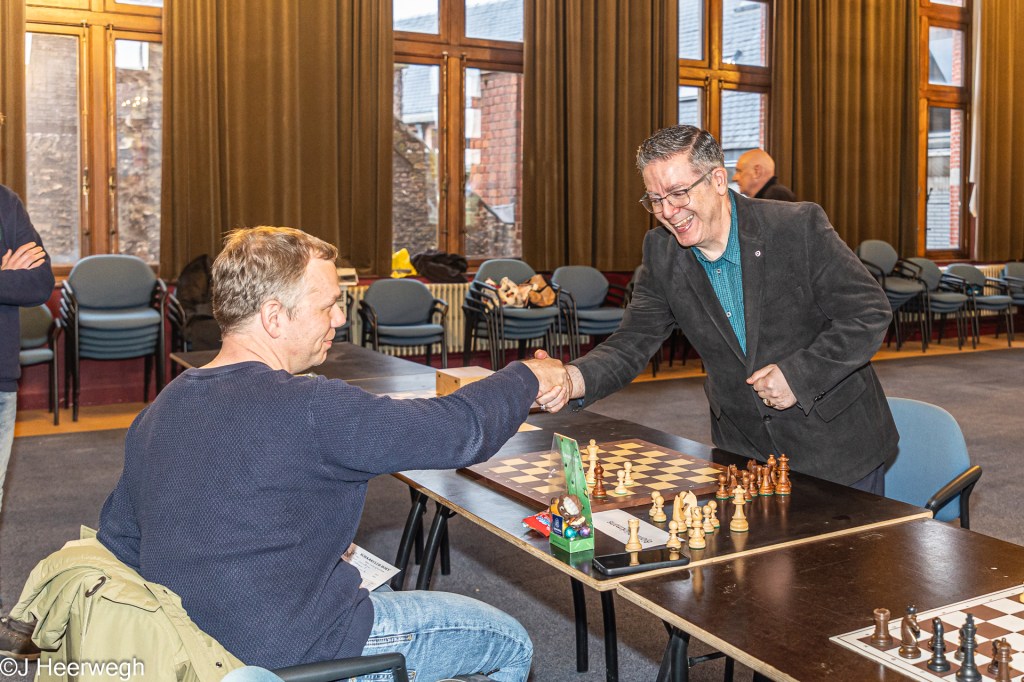
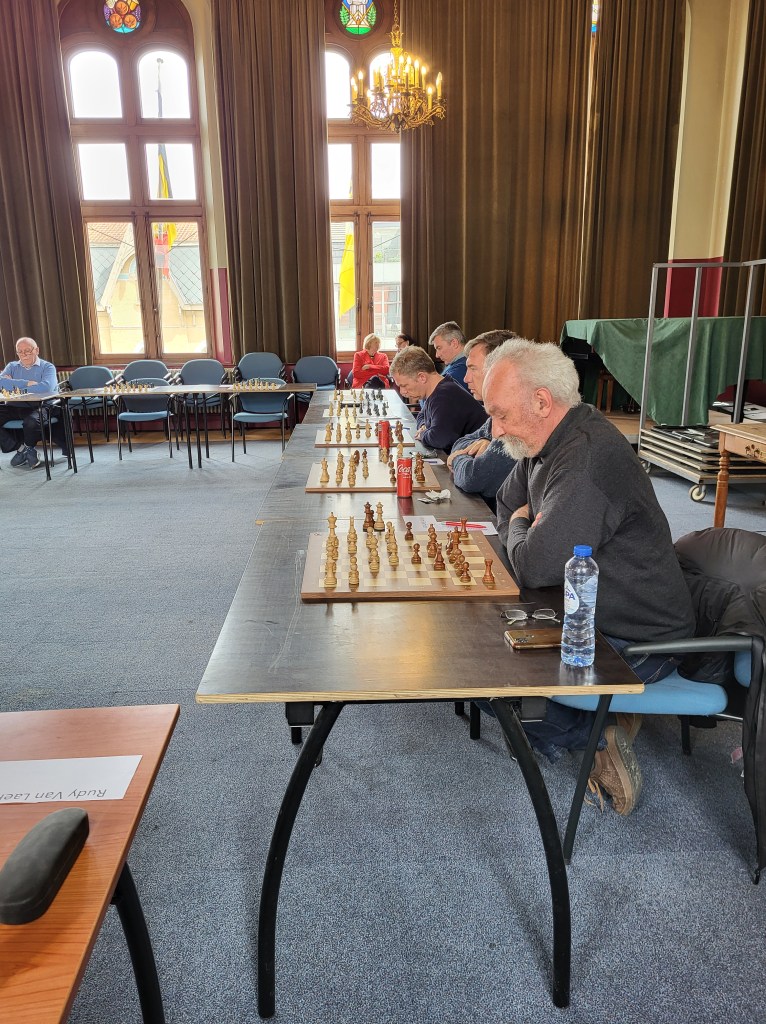
I was invited recently to do a ‘simultaneous exhibition’, playing more than 20 Chess members and friends of Boey-Temse Chess Club, celebrating the thriving club’s first 50 years (1974-2024). I would like to specially thank Marc Blommaert (Club Chairman/President) for the wonderful invitation; Luc De Ryck (former long-time Mayor of Temse) for his delightful speech; Wim Van Rossen (Alderman and prominent board member of ‘Gemeente Temse’) for his very thoughtful words and generous gift too ❤️.
Many of the photos are published with the kind permission of professional photographer Julien Heerwegh, while others were sent to me by Rita Ysewyn, Geert Vanstraelen, Geert Wille, Bart Vereecken, Marc De Meireleir and Marc Blommaert. (I have saved some photos for future occasions 😊.)
In the Chess games with Willem Verrijdt, Wiebke Barbier, Rudy Van Laeken, Kurt De Maeyer, Luc De Ryck, Robin Blommaert, Jonas De Bock, Emiel Slachmuylders, Loic Verbeke, Bjorn Dijckmans, Gust Van Der Meiren, Hugo Stuer, Geert Wille, Marc Blommaert, Marcel Wynants, Steven Lippens, Geert Vanstraelen, Luc Vereecken, Wim Van Rossen, Wim Barbier and Pascal Kegels, everyone fought well, and Pascal got a draw…and very nearly more! It was a great pleasure for me to give prizes for everyone. (Felix Verelst was also going to play, but hopefully we’ll meet at a future celebration.)
The final game to finish was the one with Bjorn Dijckmans, after 6 hours of play!!
I enjoy great movies as much as Chess! One of my absolute favourite pieces of film music was John Barry’s “Dawn Raid on Fort Knox” from 60 years ago in the 1964 James Bond “Goldfinger” 👌❤️
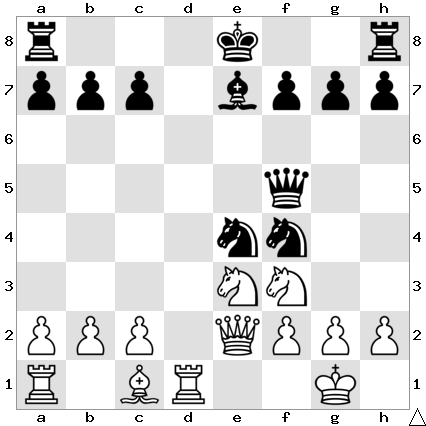
I was reminded of it by a game in the ‘simul’ which reached the following position from the Fort Knox variation of the French Defence…
It’s White to play and win!! 🙌
One of the brilliant mathematicians who played against me in the ‘simul’ was Robin Blommaert, son of Marc Blommaert. Their birthdays are both in July, but I’ll be seeing them sooner, this month. For their enjoyment–and hopefully yours too!!–I decided to compose a couple of nice puzzles in which I’m also thinking of Harriet, a dear colleague whose birthday was/is this month, and my wife Jenny who’s turning 56 next month.
Fun Puzzle in Honour of Harriet and Jenny! 💕
I saw a great film one day in April. The ‘Film day’ number F was of course something between 1 and 30 inclusive. The day number H of Harriet’s birthday in May was/is of course something between 1 and 31 inclusive. If I add up F and H and also the number of days from the Film day until Harriet’s birthday, the result is 56.
Your fun puzzle is now to figure out the exact day number in May of Harriet’s birthday! 😍
B😊nus Fun Puzzle in Honour of my youngest sister & her husband (my brother-in-law) 😊❤️
My youngest sister and her husband recently celebrated their Silver Wedding Anniversary and their birthdays too.
For simplicity in this puzzle, let’s suppose that their birthdays are on the same day as each other (same month and day number).
We’ll say that S is my sister’s age and B is my brother-in-law’s age.
Imagine calculating their sum, their difference, and their product too. Then calculate the total sum T of all of that!
I will tell you honestly that, in their case, T is always a square number, every year.
Your fun puzzle is now to figure out the age difference (in years) of my sister and her husband. 🙌💕
Word Puzzle
Rearrange the letters of LEGACY IN SUN to make a proper 11-letter English word which describes how God loves us all.
I’ve in general been so busy for quite a long time that I must soon catch up a bit with publishing solutions to various puzzles in certain previous articles, but in the meantime I wish you oodles of enjoyment with all the puzzles 😁, and please do feel free to send me your solutions by email, if you like. 👍
With kindest wishes as always,
Paul M😊twani ❤️
I’ll conclude this Blog Post #167 with the beautiful Bible Psalm 67:1
Happy Birthday to England’s International Master Andrew Martin, who turned 67 today ❤️
England’s International Master Andrew Martin 😊
Fun Puzzle in Honour of Andrew Martin 😁
I’m thinking of a unique four-digit year ABCD…it’s the only one during Andrew’s life for which A*B*C+D = 67.
The quick yet fun final puzzle today is to discover the exact year ABCD 👍😊
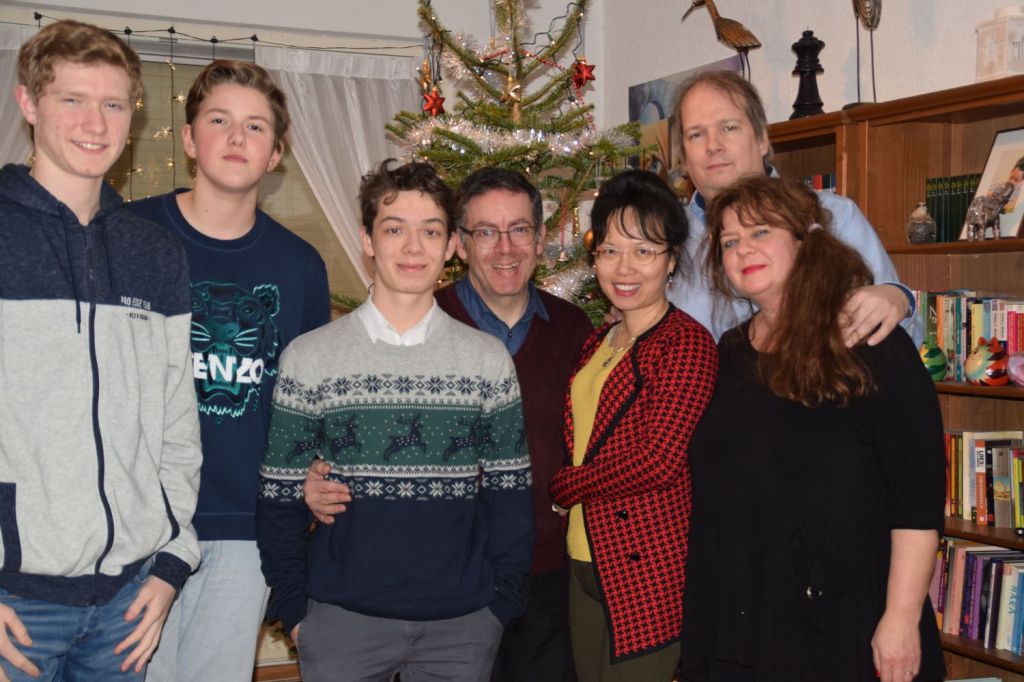
This particular blog post is dedicated to Eric & Martine Van Steerteghem. Eric turned 66 earlier this year, and he puts 100% into everything he does…so he should feel nicely at home here in Blog Post #100+66 😁. Eric’s wife, Martine, will be turning 60 on 26 April, but I’d rather be a double high-five days 🙌 early in posting very happy birthday wishes now, than risk being late due to many other forthcoming commitments!
Rearrange the letters of MARTINE to make a different proper 7-letter English word beginning with M.
In honour of my colleague Jens (one of Eric and Martine’s two sons), rearrange the letters of SON IS MAN to make a proper 8-letter English word.
Beautiful Bible Passage
Super-Special Brainteaser
Get ready to think of some super-special three-digit positive whole numbers…For convenience, we’ll give the set of them the name S. If I were to show you the numbers in S right now, you’d see directly that none of the individual numbers contain repeated digits. In other words, each one of the numbers in S contains three different digits. Also, no zeroes are involved.
Now imagine picking N, a three-digit number in S, and then writing down all the different two-digit positive whole numbers that can be formed using pairs of different digits from N. For example, if N was 185 in honour of Eric & Martine’s 18 May wedding anniversary, then we could use its digits to make 15, 18, 51, 58, 81, 85. However, 185 won’t do for N !! Why not?! The reason is that the sum 15 + 18 + 51 + 58 + 81 + 85 doesn’t equal 185.
EVERY three-digit number N in S is super-special because in each case the two-digit numbers that can be formed from N really do have a sum exactly equal to N. 👌
Having emphasized that requirement, we’re now ready to state your super-special, fun challenge brainteaser. It‘s to discover exactly which three-digit numbers are in S, and then calculate the arithmetic mean (average) of all of them by adding them up and dividing by the number of numbers in S !
I wish you oodles of enjoyment with all the puzzles 😁, and please do feel free to send me your solutions by email, if you like. 👍
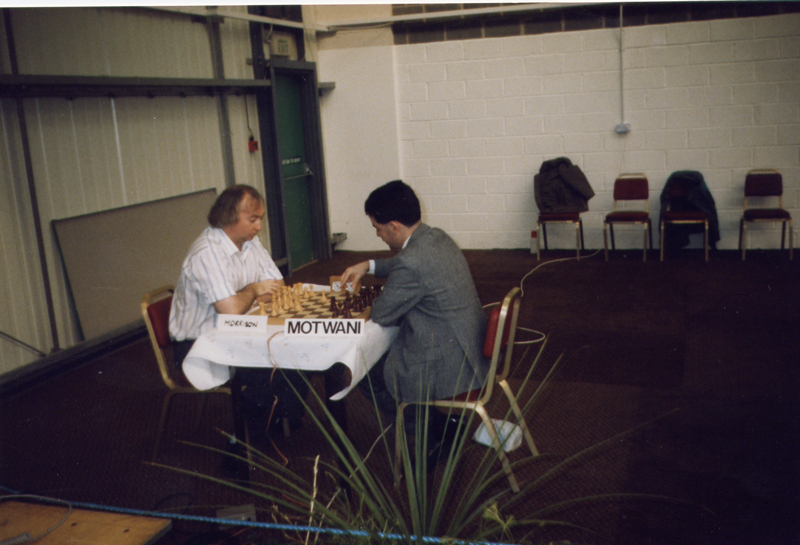
I would like to begin this article by thanking the ‘Bycco Team’ who organised the Flemish Chess Championships which took place from April 7-13 in the very spacious, comfortable, beautifully-renovated Floreal Hotel at Blankenberge, Belgium. Almost 140 players came along (many together with their families) to enjoy a wonderful week’s mixture of holidaying, relaxation, and keenly-fought, combative chess games too! The whole organisation was so good, efficient and friendly that it succeeded in catering for everyone including blind players, players in a wheel chair, and an enormous age range of something like 7.5 to 75 !! 👍❤️
Whether people opted to take part in the 9-round Experts group, the 9-round Open section, or the 7-round Senior tournament like I did, everyone had the pleasure of playing their games on top-quality chess sets linked up to digital clocks such that the moves were broadcasted ‘live’ on the internet. I didn’t play in the evening ‘blitz chess’ competition on 11 April, but many people who do like speed chess went for that extra treat. 😊
At yesterday’s closing prize-giving ceremony, FIDE Master Arno Sterck, President of the Flemish Chess Federation, thanked the brilliant Bycco Team and everyone involved in making the entire event such a great success. 👌
International Master and organiser Tom Piceu won the Open section, young super-talent FIDE Master Jacob Dreelinck won in the Experts group, and I won the Senior tournament. We received stunning trophies created by Archery Dynamics Trofeeën (Ostend) 😍, and indeed many participants are receiving money prizes after performing really well.
Such events also depend on the support of generous sponsors such as Chess Consult (Tremelo), Talistro, and especially the Cronos Group (Kontich) which is the ‘Gold Sponsor’ of chess initiatives by the Bycco Team. 🙌💕
Here are several nice photos taken in and around the Floreal Hotel…
Photo with IM Tom Piceu and young Bavo Huylebroeck 🙌😊Photo with young Bavo Huylebroeck. Bravo to Bavo!! 👍😊Photo with young Matei Govoreanu at the fabulous Floreal Hotel in Blankenberge, Belgium 👌😊
Chess Puzzle to Solve 😁
It’s White to play and win by force (from the round 2 game P.Motwani vs. R.Pauwels)
Mathematical Chess Tournament Brainteaser
Imagine that N players take part in a nine-round chess tournament and S different players take part in a seven-round chess tournament. For clarity and simplicity, assume the following details:- N and S are both even numbers. That helps in each round to pair players. N people will play 9 games each, not missing any rounds; S people will play 7 games each, not missing any rounds. We can deduce that the grand total number of chess games that will be played is 9N/2 + 7S/2. (Note: It’s NOT 9N + 7S, because we remember of course that 2 players are involved in each particular game.) 1 point will be awarded for each game: either 1 point to the winner if a game ends decisively, or 0.5 points to both players in a game if it ends in a draw. (There will be no default penalties or anything like that!!)
Here is your fun challenge brainteaser: Suppose that a total of precisely 1000 points has been scored by the end of the two tournaments! What is the exact total number of players N + S assuming that the difference N – S is as close as possible to zero? Sincere warm congratulations in advance for discovering two possible solutions (remembering that N – S could be either positive or negative). 👌🙌💕
I will always be delighted if you’d like to send me your own analytical solution by email. You could either type it yourself, or send me a nice, clear photo of your work. 👍
Please also have fun with the following word puzzle…
Rearrange the letters of I RUN SEND FILES to make U + ————
where ———— represents a proper 12-letter English word that you are warmly encouraged to find ❤️.
As an easy bonus word puzzle, rearrange the letters of RAN ROCKETS or of STAR RECKON to make the name of a president who’s turning 25 tomorrow (April 15)…and you can check your answer below…😊
To be honest, I’ve in general been so busy for quite a long time that I must soon catch up a bit with publishing solutions to various puzzles in certain previous articles, but in the meantime I’m going to now have a wee martini in advance honour of the 60th birthday coming soon of Martine, the mother of a dear Maths colleague of mine at Musica Mundi School in Waterloo, Belgium. I’m still fully intending to publish a fresh celebration article before Martine’s birthday later this month. Happy birthday wishes right now, though, to Flemish Chess Federation President ARNO STERCK, turning 5 x 5 tomorrow! 🙌😁
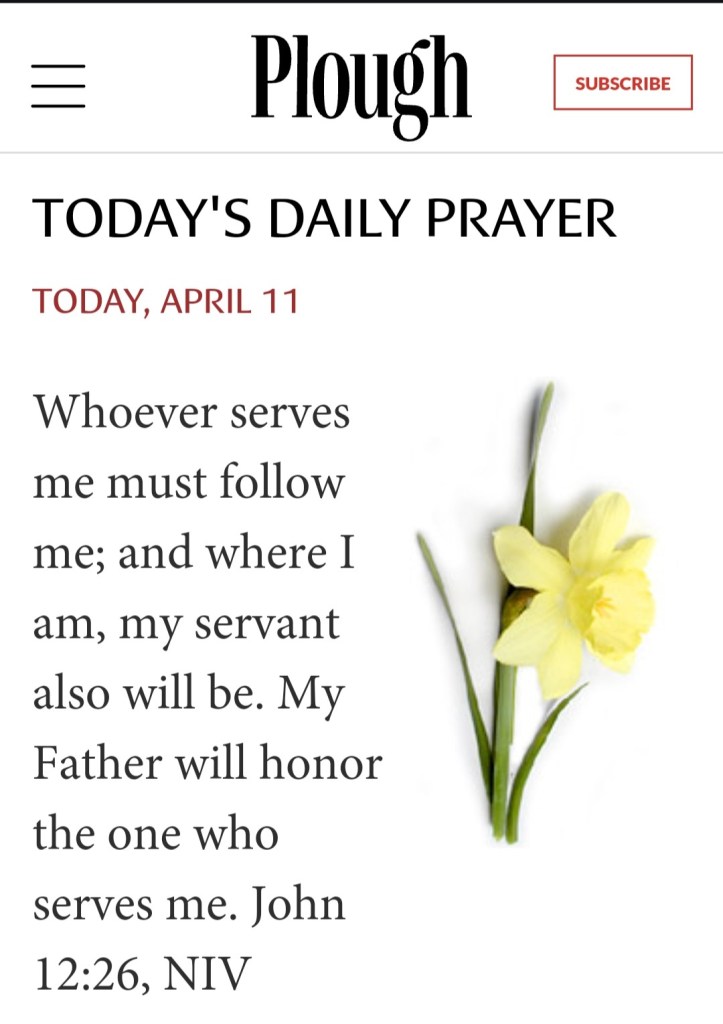
Beautiful Bible passage seen on the Plough site on 11 April ❤️
One of my funniest friends is known nowadays as Lord Christophe 😁
Lord Christophe deserves a beautiful original brainteaser in his honour, and so here it comes…! 👍😁
Lord Christophe finds a perfectly flat, horizontal, rectangular, gorgeous green garden. Its mathematical properties are so delightful that he decides to buy it!
It has length L metres, width (unbelievably 😂) U metres, perimeter P metres, and area A square metres.
P, A, U and L are all whole numbers.
Lord Christophe also loves the fact that, for his special garden, P = A.
He laughs out loud when he learns that LORD CHRISTOPHE rearranges to make SPORT CHILD HERO 😂🙌🤣
So, he picks the speediest mathematical student of Musica Mundi School to sprint in a perfect straight line diagonally across the garden from one corner to the diagonally opposite corner, then diagonally back again.All that is to be done ten times…
…and like The Flash or a rocket!
And now, dear friends, this is your Prize Brainteaser: The total distance (in metres) that the student sprints equals the square root of C, where C is a whole number. In honour of Lord Christophe, what is the exact maximum possible value of C ?
Please feel free to send me your best answers by email 👍👌
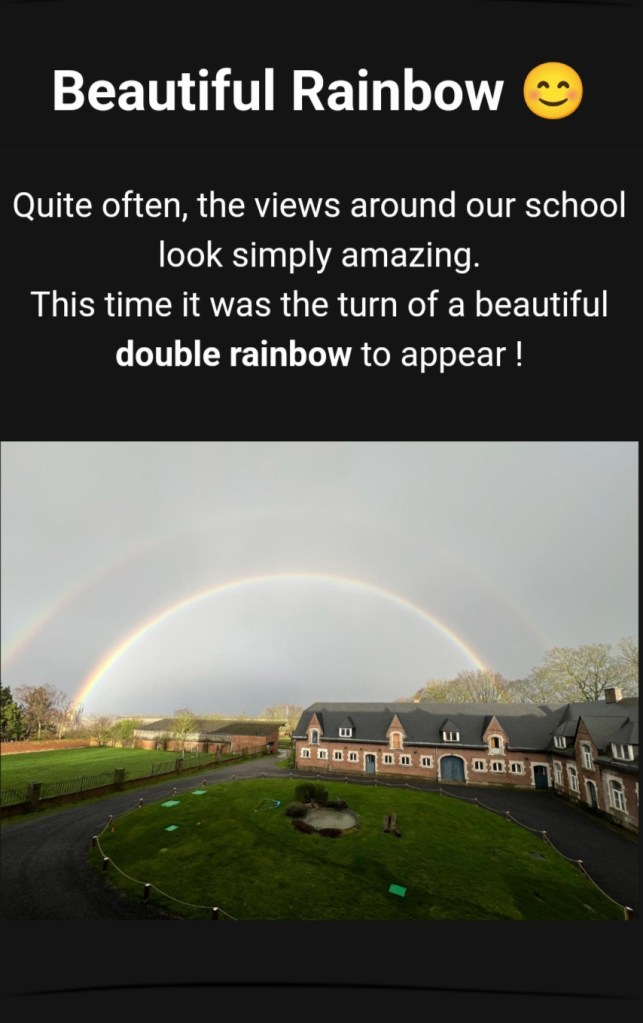
A lot of the loveliest photos around the school are by Lord Christophe. I think that the following recent photo was by him; it’s certainly a gorgeous one to enjoy 😍
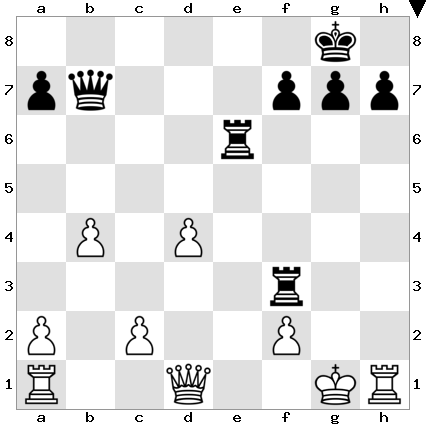
Please also have fun with the following wonderful Chess puzzle from a recent training game of mine. It’s Black to play and win 😍
It’s Black to play and win 😍
A Facebook friend of mine named Antonio posts beautiful, inspirational daily messages to spread the truly Good News of The Bible for as many people as possible to benefit from knowing it.
We’re already 50 days into 2024, but I have been so busy trying to do my best with many commitments that I’m only now finally finding time to publish my first blog post of this year. As I met up with lots of Chess friends in recent days during the school holiday, it’s a pleasure to now share many happy moments via nice photos 😊❤️😊
I saw this stunning image ❤️ on the Facebook page of Grandmaster Alexander Baburin, an old Chess friend of mineA lovely photo ❤️ of Grandmaster Koen Leenhouts holding his prize and his son, Max, at the closing ceremony of a recent great Chess tournament in Wachtebeke, BelgiumI was highly impressed in Wachtebeke by the play of numerous talented and very strong young players, some of whom are pictured above 👍😊On the left is Jacob Dreelinck, a young Chess super-talent, and in the middle is Yordi De Block who performed very well indeed, too, and was also undefeated in Wachtebeke 👍😊Older generation players (including myself!!) also had a fabulous time in Wachtebeke ❤️
Time for a quick, wee Chess joke…!!
What’s the first name of a brilliant Belgian Chess player who can be as good as a Woman International Master!?
Answer: Wim!
P.S. If you see me with a black/blue bruise soon, you’ll know my joke backfired!! 😂
Johan Krijgelmans works enthusiastically on Chess, and I reckon that he’s going to keep getting better and better 👍😊Valère De Buck and I fought a good Chess battle in the final round of the Senior Tournament in Wachtebeke 👍😊. I was of course delighted to win the event with a score of 6/6, and I wish to thank organiser Dennis van Vliet and his entire team for doing everything so well. It was also a pleasure to play and get to know Luc, Wim, Johan, Pierre, Thierry and Valère.The runner-up who won second prize with 4.5/6 in the Senior Tournament in Wachtebeke was Pierre Theon 👍😊, a super-experienced (now retired) Mathematics teacher from France.
To do well in Mathematics or Chess it’s essential to practise a lot, and that requires precious time and great dedication.
I will now share with you an original Maths brainteaser which I created to celebrate the birthday of a friend named Eric who was turning 66 earlier this month…
I sent this on 9 February:
“Suppose that the Quadratic Equation x2 + bx + c = 0
has two positive whole number solutions for x.
In honour of Eric’s birthday on 12 February, we’ll say that c – b = 122.
Your Prize Puzzle Challenge now is to solve the equation x2 + bx + c = 0.
Please feel free to send me your two solutions for x by 12 February 👍😊
Wishing you lots of fun and happy solving,
Paul/Mr. M😊.”
Eric used EXCEL to solve the puzzle, which was OK as it was for his birthday, after all!! 😂
In general, though, I always hope that some people will send in a beautiful analytical solution worked out by themselves.
Warm congratulations to 14-year-old Wonderful Wout Callens who did solve the puzzle and sent me this, for which I will be delighted to present him with a nice prize in school this week:
“Dear Mr. Mo,
These are the steps I used to solve the problem:
c-b = 122 so c = b+122.
As the solutions are required to be positive whole numbers, we can derive from the quadratic formula that b<0 and that √(b2 – 4ac) must be a whole number.
We know that a=1 and that c=b+122 and substituting that into the square root and rearranging the expression, we get that √((b-2)2 -492) must be a whole number.
Then I tried out values for b for which √((b-2)2 -492) was equal to a whole number and found the values b=-42 or 46, but as b<0, b =-42.
Hence c=122-42=80.
Substituting a=1, b=-42 and c=80 into the quadratic equation, we get that x equals either 2 or 40.
Enjoy your holidays 😊
Wout.”
Thank you and congratulations again, dear Wout! 👍😊
I wrote personally to Eric on his birthday to say,
Dear Eric,
Happy birthday!! Have a really wonderful time!
Congratulations on finding that x = 2 or 40 in the puzzle I sent on Friday.
In this New Year ’24, add up 24 + 2 + 40 to get a nice total for your birthday!!!
With kindest wishes as always to your whole family,
Paul 😊.
Now, keen young or older fans of Mathematics could be interested to learn that there actually exists a super-fast method for solving the puzzle in a matter of seconds without even needing a calculator, and without even needing to figure out the individual values of b or c!! First, I will present a quick piece of theory which helps to crack the puzzle speedily👌
Suppose that the solutions to the quadratic equation x2 + bx + c = 0 are x = p or x = q. Then (x-p)(x-q) = 0, which leads us to x2-(p+q)x + pq = 0. Comparing coefficients in the quadratic equations can help us to realise that p+q = -b and pq=c. (Note: Those results can also be proved using the Quadratic Formula.) So, c-b = pq+p+q. Next comes a highly noteworthy mathematical trick… c-b+1 = pq+p+q+1 which factorises to (p+1)(q+1).
In the specific case we had where c-b = 122, we get that c – b + 1 = 123, and so (p+1)(q+1) = 123 = 3 x 41 (or 1 x 123). Therefore, since the puzzle required that p & q had to be positive whole numbers, it follows that p+1 = 3 & q+1 = 41 (or vice-versa), and p=2 & q=40 (or vice-versa). 💕
Those positive solutions are unique, but having a different value for c-b such as 2 would mean that c-b+1 = 3 which is 1 x 3 for (p+1)(q+1), and then we wouldn’t be able to get positive solutions for both p & q. Also, a different value for c-b such as 23 would mean that c-b+1 = 24 which is (1 x 24 or) 2 x 12 or 3 x 8 or 4 x 6 for (p+1)(q+1), and we would consequently get several possible pairs of values for p & q (unless we were to pin down specific individual values for b & c rather than just saying what value c-b has).
Quick Word Puzzle:
Rearrange the letters of RETRIED to make another proper seven-letter word also beginning with R.
Valère De Buck was rightly very pleased to discover a beautiful finish as White (to play and win) in a lovely game of his in Wachtebeke.
Valère calculated 1 fxe4 fxe4 2 Qg4+ and then 2…Kf6 3 Rf1+ or 2…Qf5 3 Rxe4+ Kf6 4 Rf7+ or 2…Kxd6 3 Bf4+! gxf4 4 Qxg6+ or 3…Kc6 4 Rc7#, checkmate! ❤️
Solution to Word Puzzle (given earlier, above):
RETIRED
I will round off this article with the following message:
The time is coming ever-nearer when everyone will know the answer to the question “Who can we count on totally to fulfill every important promise?” No matter what obstacles anyone might seem to cause (either deliberately or unintentionally), we can rest assured that the Will of God always prevails exactly when God wills it, and the timing is always perfect, no matter whether we think it is or not! One key theme permeating the Book of Numbers within The Bible is God’s unwavering fulfillment of promises, and that still holds true, no less now than ever. A very positive, warm reminder of blessings is this: “The Lord bless you and keep you; the Lord make His face shine on you and be gracious to you; the Lord turn His face toward you and give you peace.”–Numbers 6:24-26. 💕
The Bible verse wording is very slightly different in the image above, but the good message always remains essentially the same 💕
I do most sincerely wish everyone a really blessed Christmas, and I now offer a nice selection of fresh, home-made puzzles for free consumption and enjoyment!! 😊💖
A Merry Christmas Surprise! 💖
Start with the total number of letters in MERRY CHRISTMAS EVERYBODY. Multiply by the total number of letters in PROMISES. Also multiply by the total number of letters in FULFILLMENT. Did the final result bring a nice smile to your face!? 😁
Early Happy New Year Brainteaser! 😊
Suppose that ‘a’ and ‘b’ are whole numbers such that 1 < a < b < 2023.
What is the minimum-possible value of the fraction b/asuch that 2023 * b/a equals some future year?
Puzzle Fans Brainteaser!! ✔️😎
Seasonal Celebrations at Musica Mundi School, Waterloo, Belgium 🎶👌
Suppose that whole numbers 1, 2, …, N are about to be given out randomly to N people (one number each), so that each person’s number will be different. Two people will multiply their own numbers together. All the other people will multiply their own numbers together. The latter group is certain that their result will be the bigger product. To guarantee that, what is the minimum value of N?
Three Sneaky Word Puzzles 😁😁😁
Remove only the letter E from A HEART BRO and then rearrange the remaining 8 letters to make the name of a lovely coastal town which is the largest town in the county of Angus in the East of Scotland. (That will be a nice ‘n easy puzzle for Scott Fleming, a friend who lives there!! 😁)
Think of a beautiful musical instrument which has 5 letters when written in plural form with s on the right end. Move only the s to the start to make a different proper 5-letter English word.
😍🎶
Also, rearrange the letters of LYRICS END to make the proper name of a mathematical shape (in plural form, with s on the right end).
Deep-Thinking Brainteaser! 👍😊
The image (which is NOT drawn to scale!) is a front-view sketch of a cylindrical pipe of diameter d, partially filled with water to a depth h = d/5 (at the deepest part throughout the pipe). The pipe is only P% full (that is, P% of its maximum capacity). The brainteaser challenge is to figure out the value of P, correct to 4 significant figures ✔️😎
Quick ‘n early New Year B😊nus
Suppose that Y is the value of 100*P, correct to 4 significant figures. In the New Year 2024, we’ll be able to say that it’s then X years since the start of the year Y. What is the value of X? (You don’t have to count the small change of ten days made to the Gregorian calendar in 1582 !!)
A Magical Family Brainteaser! 😍💕
Suppose that I know a lady whose birthday is on the same day and month as that of her daughter. The daughter’s age (in years) is now D, which is a whole cube number. The talented mathematical daughter said to her mum, “Your age now, multiplied by my future age after any number of years, would be exactly the same as my age now, multiplied by your age twice as far into the future!”
Based on the information above, what was the most probable age of the mother when her daughter was born? Justify your answer with a reason.
A Number Mystery Brainteaser! ✔️👏
In honour of Scottish friend Scott Fleming, I am thinking of a personal special three-digit whole number ABC. It’s exactly equal to E * EG, where EG represents not E*G but rather the unique two-digit whole number EG which has the same value as G2+E. Your fun brainteaser is to figure out exactly what number ABC is!
Extra B😊nus!
What is special about the value of E2+G2+H2+I2 where HI represents the first two digits of the number Y which featured in an earlier b😊nus in this blog post?
Checkmate Time! 👍😊
Chess Fun at Musica Mundi School 😁
Léopold M., a very keen and gifted young Chess player whom I know, is one of many friends who’ll enjoy solving the following checkmate Chess puzzle 😍
This position is from a recent training game in which I was Black against a strong Chess engine. It’s Black to move, and your fun puzzle is to figure out the forced checkmate in 10 moves that I played in the actual game 😊
It’s my intention to publish solutions to all the puzzles around the time that blog post #163 comes out, God-willing as always. (Before then, I will finally publish solutions to the puzzles of blog post #161 !)
Please do feel free to send me your best solutions to any or all of the puzzles, if you like 😊.
I would like to round off this article by most sincerely wishing you again a very blessed Christmas and New Year soon, with lots of happiness in everything that you do ❤.
With kindest wishes as always,
Paul M😊twani ❤
“It is the Lord who directs your life, for each step you take is ordained by God to bring you closer to your destiny.”–Proverbs 20:24 💕
My thanks to the Murphy Family for the lovely gift of cosy socks that they very kindly gave me yesterday. My steps will surely be all the warmer from now on!! 😁
The concept of ‘Parity’ is even more important in relation to people than it is with regard to whole numbers in Mathematics. Two numbers are of equal parity (no matter how big or small they are) if they are either both even or are both odd numbers, but all people are loved infinitely by God, our Creator, and so no-one is less important than anyone else. In that respect, we have parity (equal importance). Each person is unique, though, and I would like to very sincerely wish you lots of happiness and success in using your personal gifts to do as much good as you can. 💖
A photo from the Chess Club at Musica Mundi School 💖
Puzzle: We awarded 1 point for a win, 0 for a loss, 0.5 to each player in the case of a draw. Five players are (at least) partly visible in the photo. Their total points awarded from the games pictured turned out to be 3 points.
What conclusion can you deduce from that information? 👍✔️
Wonderful Quotation: “To listen to the Word of God, listen with your ears and hear with your heart”–Pope Francis 💕
Word Puzzle: Rearrange the letters of PRAY IT to make a proper, six-letter English word.
Bonus Word Puzzle: Rearrange the letters of PREP HOW to make a seven-letter word.
Extra Bonus Word Puzzle!!: Rearrange the letters of FED MORE to make a seven-letter word. 👍😊
With Chess Friends Jelle, Hans, Lennert and Remy 😊
Two people I know well, who both have birthdays tomorrow, are Ask-Johannes (a Norwegian teenager) and Michael-Roy (the eldest son of Paul & Gill, very dear Scottish friends of mine). 💕
A Nice Numbers Happy Birthday Brainteaser for Tomorrow, 22 November, in Honour of Ask-Johannes and Michael-Roy 😊🎂😊🎂
The new ages tomorrow of Ask-Johannes and Michael-Roy will be numbers of the same parity (meaning both even or both odd, as mentioned earlier), and Ask-Johannes will still be a teenager. The product of the two new ages will be almost 222.
Part 1: What precisely are the two new ages if I tell you that their product is the largest number it could be that fits with the clues?
Part 2: How exactly do you know that the product cannot be 1 more than in Part 1? There might seem to be a solution which works with the larger product, but why doesn’t it?
Part 3: To determine the correct new ages in Part 1, why was it important to know that they are numbers of equal parity?
Part 4.1: Ask-Johannes’ older teenage sister, Vilja, had her birthday last week. Tomorrow, Ask-Johannes’ new age A will be of equal parity to Vilja’s age V. How old is Princess Vilja?
Part 4.2: What is most special about the day coming in A+V days from now?
Part 5: Scott Fleming from Arbroath, Scotland, is one of my friends on Facebook. I would like to offer early, advance, happy birthday wishes to Scott. A wee bonus puzzle for everyone else is to figure out Scott’s birthday (just the day and month) if I tell you that it’s in A days from now.
A Happy Birthday Brainteaser for Today, 21 November, in Honour of Murad, Marie, Ian and Chris, all friends of mine on Facebook!!!! 😊🎂😊🎂
The sum of the four friends’ new ages is 212, a palindrome.
Murad is the youngest, but finished being a teenager several years ago. He is now M years old.
The sum of Marie’s and Ian’s new ages is M+100.
Chris’s new age is the biggest of the four, and it’s a palindrome.
How old is Murad?
Quick, Wee Bonus Part 😊
A few days ago, I played in a Chess match in a very pleasant location at Hundelgemsesteenweg number 10*M in Merelbeke, Belgium. 👌
I won with Black in 10*M – 200 moves.
Everyone in the two teams was offered really nice complimentary refreshments during and after the Chess match.
Here are a few photos from the day.
After the game with Joris 😊😊
With Eric Van de Wynkele, owner of the lovely pieces of art 👍😊
It’s my intention to publish solutions to all the puzzles around the time that blog post #162 comes out, God-willing as always. (Before then, I will finally publish solutions to the puzzles of blog post #160 !) By the way, without needing to calculate the results, which of the numbers 158, 161 or 162 equals the product of two numbers of the same parity (given that one of the three choices is correct)!?
Please do feel free to send me your best solutions to any or all of the puzzles, if you like 😊.
I would like to round off this article by most sincerely wishing you a very blessed month of December soon, with lots of happiness in everything that you do ❤.
With kindest wishes as always,
Paul M😊twani ❤
“The Lord always forgives everything! Everything! But if you want to be forgiven, you must set out on the path of doing good. This is the gift!”–Pope Francis.
P.S. = Puzzle Solutions (being posted now on 27 December 2023)
The boy standing up must have won his Chess game. Reason: The total number of points for each game is 1 (either 1 point to the winner or 0.5 to each player in the case of a draw). So, the total for the two games involving four seated players was 2 points, but we were told that the grand total–including the boy visibly standing–was 3 points. Therefore, he scored 1 point, which means that he must have won his game. 👍
PRAY IT→PARITY
PREP HOW→WHOPPER
FED MORE→FREEDOM 😁
Ask-Johannes = 16 & Michael Roy = 30. 16 x 30 = 480, just four less than 484 = 222.
Note that 483 = 3 x 7 x 23, which doesn’t involve any teenage option.
The same is true of 482 = 2 x 241.
481 = 13 x 37 might seem to work, but we were basically told that Ask-Johannes was already a teenager, and so he wouldn’t just be turning 13 this year.
Also, being told that Ask-Johannes and Michael-Roy have ages of equal parity enabled us to be sure that the solution was 16 x 30 = 480 rather than 480 = 15 x 32 (which would involve numbers of different parity). 🙌
Princess Vilja = 18 (older than Ask-Johannes, but still a teenager whose age is of the same parity). 😊
A+V = 16 + 18 = 34, and 34 days after the first publication date of this blog post was…Christmas Day!! ❤️
Scott Fleming’s birthday was on 7 December. 🎂
Murad = 23 (Marie + Ian→123; Chris = 66; the grand total = 23 + 123 + 66 = 212). 👌
161 = 7 x 23, the product of two (odd) numbers of the same parity.
Note that neither 158 nor 162 are multiples of 4, and so neither of them could be the product of two even numbers. ✔️
In the previous blog post, I featured ‘The Saints’ Little Book of Wisdom’, which is such a precious gem of a book that I am very warmly recommending it again here, to everyone. There are so many good things to learn by reflecting on and practising in our lives the pearls of wisdom contained in the book.
In addition to the quotes within the lovely image above, another favourite of mine from St. Teresa of Avila is: “You pay God a compliment by asking great things of Him.” 💕
As usual, I also have several good-fun puzzles to share 👍😊
A Kettle Puzzle! 😊
My kettle at home displays 100 when the water in it boils. Afterwards, as the water cools gradually, the display number drops by 1 unit (degree Celsius) at a time, until it finally settles at around room temperature.
Looking at the photo above, I said to myself, “The temperature has dropped by 72° (from 100°) down to 28°. 72 x 28 = 2016.”
Kettle Puzzle Part 1
If I were to observe the temperature all the way while it dropped from 100°, and at each moment calculate
Temperature drop from 100 x Temperature displayed
what would be the maximum result that I could get like that? ✔️👏
Kettle Puzzle Part 2
The example result of 2016 (given above) ends with a 6. What is the probability that I could get a result ending in my favourite 3? 😍
(Please assume that I do my calculations correctly!!)
Cheers to Chess Puzzle!
Instead of drinking hot chocolate as in the photo above, I often drink delicious Musica Mundi School apple juice while I’m enjoying Chess with the students.
Suppose that 46 students drink a collective total of 350 cups of apple juice, and they all drink at least one cup each.
Cheers to Chess Puzzle, Part 1
As a very reasonable mental Maths exercise (without using any calculator), figure out, correct to 1 decimal place, the Mean (Average) number of cups of apple juice drunk per student.
Try to write a sentence or two to describe clearly the method you used to figure out your answer mentally. 👍
Cheers to Chess Puzzle, Part 2–A Brainteaser!! 😘
Given the information stated before Part 1, what is the maximum possible value for the Median number of cups drunk?
Cheers to Chess Puzzle, Part 3
If the maximum possible Median actually occurs, then what is the Modal number of cups drunk?
Also, what is then the Range = Maximum – Minimum number of cups drunk?
Welcome to Misato, Puzzle!
Misato, our newest wonderful student at Musica Mundi School, came all the way from Australia to Belgium this week. Helen, one of the English teachers, told me that Misato is really strong in her subject. So, I made now a nice word puzzle in honour of Misato.
Word Puzzle for Misato, Part 1
Remove just the letter A from MISATO, and then rearrange the remaining 5 letters to make a proper 5-letter English word. Try to find two different, correct solutions. ✔️👍
Word Puzzle for Misato, Part 2
Remove just the letter I from MISATO, and then rearrange the remaining 5 letters to make a proper 5-letter English word. Again, try to find two different, correct solutions. 👏
A Cute Double Checkmate Chess Puzzle!!
If it’s Black to move, checkmate can be forced in 5 moves.
If it’s White to move, checkmate can be forced in 4 moves.
Have fun solving that cute double checkmate Chess puzzle!! 😍
It’s my intention to publish solutions to all the puzzles around the time that blog post #161 comes out, God-willing as always. (Before then, I will finally publish solutions to the puzzles of blog post #159 !) By the way, without needing to calculate the result, which of the numbers 159, 160 or 161 equals the sum of the first eleven prime numbers (given that one of them is correct)!?
Please do feel free to send me your best solutions to any or all of the puzzles, if you like 😊.
I would like to round off this article by most sincerely wishing you a very blessed month of November soon, with lots of happiness in everything that you do ❤.
With kindest wishes as always,
Paul M😊twani ❤
“In all created things, discern the providence and wisdom of God, and in all things give Him thanks”–St. Teresa of Avila.
P.S. = Puzzle Solutions (being posted now on 30 November 2023)
Kettle Puzzle Part 1: Maximum-possible result = 50 x 50 =2500.
Kettle Puzzle Part 2: None of the results in this particular Maths “story” can ever end with a digit 3, and so the probability of such a result occurring is simply zero. (Basically, it was a “trick question”!! 😁)
Cheers to Chess Puzzle, Part 1: To calculate 350 ÷ 46 mentally, one method is as follows…
7 x 46 = 7 x (50 – 4) = 350 – 28 = 322, with 28 still “to spare” from the 350 cups in the puzzle.
Next, 28 ÷ 46
= (23 + 5) ÷ 46
= (46/2) ÷ 46 + (4.6 + 0.4) ÷ 46
= 1/2 + 1/10 + nearly 1/100
= 0.5 + 0.1 + less than 0.01.
Putting that together with the chunky 7 found earlier…
the correct quotient result for 350 ÷ 46 will be…
7.6 for the Mean, correct to 1 decimal place ✔️
Cheers to Chess Puzzle, Part 2: Imagine the 46 students lined up in order, starting with the students who drank the least number of cups, and then going all the way up to the students who drank the most. The Median will be found in the middle of the long line by calculating
(the total number of cups drunk by Student #23 & Student #24) ÷ 2.
To maximise that result, let the first 22 students drink only 1 cup each (not zero, though, because we were told that everyone drank at least one cup each). Then, we have retained 328 cups to share amongst the final 24 students.
328 ÷ 24 = 13.7 (approx.), and so the most that we can allocate to Student #23 is 13 cups (whole number).
Then 315 cups still left ÷ 23 students = 13.7 cups per student (approx.), and so the most that we can allocate to Student #24 is again 13 cups (to also have a whole number of cups for him or her).
Therefore, the maximum-possible Median = (13 +13) ÷ 2 = 13 cups. 👌
Cheers to Chess Puzzle, Part 3: Following on directly from everything written in Part 2 above, imagine that we just give Students #25 up to #46 only 13 cups each. We’ll have “used up” 22 x 1 + 24 x 13 = 334 cups with just 16 cups still “to spare” from the total of 350.
At that moment, 22 students have 1 cup each & 24 students have 13 cups each (and we’ll get to the spare 16 in a wee moment!). As things stand right now, the mode is 13. It’s the “winner”!
Can any other number overtake it in popularity, by using the “spare” 16 cups…?
Well, if (for example) we bumped up 16 of the numbers 13 each to 14, then we’d have this situation: 22 students with 1 cup each, 8 students with 13 cups each, and 16 students with 14 cups each. The mode in that case would be 1.
To illustrate a couple of other alternatives…we could have 6 students with 1 cup each, 16 students with 2 cups each, and 24 students with 13 cups each. The mode in that case would be 13.
We might alternatively have 22 students with 1 cup each, 22 students with 13 cups each, and 2 students with a “lucky 21” cups each! The joint winners there for popularity are 1 and 13: they are both modes in this case, and in summary they are the only possible modes when the maximum median of 13 occurs. 👍
Word Puzzle for Misato, Part 1
MISATO – A = MOIST or OMITS.
Word Puzzle for Misato, Part 2
MISATO – I = ATOMS or MOATS or STOMA. 👏
A Cute Double Checkmate Chess Puzzle!!
If it’s Black to move, checkmate can be forced in 5 moves with 1…Rg1+! 2 Rxg1 Rxg1+ 3 Kxg1 Qg4+ 4 Kh1 (longer than 4 Rg2 Qxg2#) 4…Qd1+ 5 Rf1 Qxf1#.
If it’s White to move, checkmate can be forced in 4 moves with 1 Qa8+ Kd7 2 Qb7+ Kd8 3 Qb8+ Kd7 4 Qc7#. 😍
Regarding the sum of the first eleven prime numbers, 2+3+5+7+11+13+17+19+23+29+31=160. Even without calculating the actual result, we could know that it had to be even, because ten odd numbers make 5 pairs of odd numbers, equivalent to a sum of 5 even numbers. That has to be even, and adding on 2 (the smallest prime, and the only even prime) keeps the total even for sure. 😊
I try to be grateful always for every moment that God grants, and this summer was filled with wonderful people, places, events and countless other blessings.
On holiday in Croatia; sunset in Zadar ♥Our first evening, in Dubrovnik ♥
Just one of the special companions for me during three open international Chess tournaments–one in Germany and two in Belgium–was The Saints’ Little Book of Wisdom (compiled by Andrea Kirk Assaf).
One of my absolute favourite quotations from this gem of a book is: “Every moment comes to us pregnant with a command from God, only to pass on and plunge into eternity, there to remain forever what we have made of it.”–St. Francis de Sales ♥1st= on 6 out of 7 (5 wins & 2 draws) at the Senior International Open Chess Championship in Magdeburg, Germany ♥ Everywhere I went this summer, I was delighted to make many new friends, and meet up with great old friends too.The Belgian Senior International Open Chess Championship, Round 2 on 7.8.2023 ♥Belgian Senior International Open Chess Championship Prizegiving 1st= on 4.5 out of 5 😊2nd= on 7.5 out of 9 (6 wins & 3 draws) at the Belgian International Open Rapid Speed Chess Championship. I’m pictured there with International Arbiter, Geert Bailleul 😊Paul & Jenny pictured at Krk Island, Croatia ♥Paul & Jenny during a nice walk in Zagreb, Croatia ♥Paul & Jenny at a lovely restaurant during the final evening in Zagreb ♥Beautiful Night at the Atomium ♥
Creative Puzzles Time!! ✔👌😎
Puzzle #1, Part 1
Write down the proper English name for the mathematical 3D shape shown above. Then rearrange the letters of the name to make another proper English word 👍
Puzzle #1, Part 2
Suppose that, in the diagram above, the dimensions r, h and L are all whole numbers of centimetres.
Part 2.1: Explain how you can then be absolutely sure that r, h and L must all be different, distinct numbers.
Part 2.2: Also, what is then the absolute minimum possible value for
the sum r + h + L?
Part 2.3 Brainteaser:
Thinking ahead with hope to blog post #160 (God-willing as always), can you discover suitable whole number values for r, h and L such that r + h + L = 160?
Puzzle #2
Think back to Blog Post #158…Can you discover a fitting reason for why June 7 was the perfect date for that post to be published?
Puzzle #3(Brainteaser)
Suppose that Beethoven is writing down the same one-digit whole numbers that friends Jens, David, Jan, Herman, Peter and Paul are thinking of. Among us six seated friends, it turns out that we are all thinking of the same number…except for Paul! So, five of our numbers are identical; only Paul’s number is different. When Beethoven multiplies the six numbers together correctly, he gets a particular year that was just the second year of a certain century in the past. Exactly what year does Beethoven get in this puzzle!? 👏
Very warm congratulations to my niece in England on achieving fabulous top results in all of her national exams this summer 👏 Hearty congratulations also to every one of my Musica Mundi School students who sat Cambridge Mathematics exams this year, as they all succeeded really well 👍😎
Suppose that my niece in England and her dad play almost 100 Chess games together. To encourage really good, combative play, I award three points for a win, 1 point each for a draw, no points for a loss. After all the games have been played and points have been duly awarded according to the results, we calculate
Total Points of the Two Players ÷ Number of Chess Games they Played.
In their case, that turns out to be a decimal number a.b, in which ‘a’ is the whole number part, and ‘b’ is the one-digit decimal part.
If we convert the decimal number a.b to a fraction in its simplest form, we get c/d, where c and d are prime numbers, and a, b, c and d are all different.
Given the information above, your Sunset Girl Mega-Brainteaser in honour of my niece is to figure out the exact maximum-possible number of games of Chess that she played with her dad. Also, exactly how many of those games ended with a decisive win/loss result, and exactly how many of the games ended as draws?
Puzzle #5: Checkmate! 😃
It’s White to play & win by force in a real Grandmaster clash from 1962, the year when I was born 💖
It’s my intention to publish solutions to all the puzzles around the time that blog post #160 comes out, God-willing as always. (Before then, I will finally publish solutions to the puzzles of blog post #158 !)
In the meantime, please do feel free to send me your best solutions to any or all of the puzzles, if you like 😊.
I would like to round off this article by most sincerely wishing you a very blessed month of September soon, with lots of happiness in everything that you do ❤.
With kindest wishes as always,
Paul M😊twani ❤
“As gifts increase in you, let your humility grow, for you must consider that everything is given to you on loan, from God”–St. Pio of Pietrelcina.
“The secret of happiness is to live moment by moment and to thank God for all that He, in His goodness, sends to us day after day”–St. Gianna Beretta Molla.
P.S. = Puzzle Solutions (being published now on 30 October 2023)
CONE→ONCE.
Pythagoras’ Theorem tells us that L2=r2+h2.
There are, of course, cases in which it’s possible for r and h to equal each other,
but then L2 = 2r2
and so L = √2*r.
That’s not possible if L, r and h have to all be whole numbers (because √2, the square root of 2, is an irrational number).
Therefore, if L, r and h are positive whole-number dimensions on the cone, they must all be different from each other, and the slant height L must be greater than r and also greater than h.
In that case, the minimum-possible value for r+h+L is 3+4+5 = 12.
The consecutive whole numbers 3, 4, 5 form the most famous Pythagorean Triple: 32+42=52.
Whole numbers fitting the challenge r+h+L=160 are 32, 60 & 68. Note that 322+602=682. Also, the numbers 32, 60, 68 are four times larger than the famous 8, 15, 17 Pythagorean Triple in which 8+15+17=40.
June 7 was the perfect day for Blog Post #158 to be published because it was the 158th day of 2023.
Beethoven would get 1701 (the second year of the 18th century) by correctly calculating 3 x 3 x 3 x 3 x 3 x 7.
In the brainteaser about Chess games, a.b = 2.6 = 13/5 = c/d.
a=2, b=6, c=13, d=5 with c and d being prime, as was stated in the puzzle.
60% of all the games end decisively and 40% of all the games are draws, which is why a.b = 2.6 or 3 – 0.4. (If all the games had ended decisively, then a.b would have reached its maximum-possible value of 3.)
The maximum-possible number of games (less than 100) is n=95, of which 60%→57 games are decisive wins and 40%→38 games are draws. Note: We wouldn’t get whole numbers there if n wasn’t a multiple of 5.
In the puzzle about Chess moves from 1962, White can win with 1 Qe6! Qxe6 2 Rxh7#, a neat checkmate! 👍😊💖