Though it’s been almost four and a half months since my previous published blog post, I don’t forget to give thanks always to God for every moment of every day 🥰
I will now share some of those blessings via a nice selection of happy photos 😊
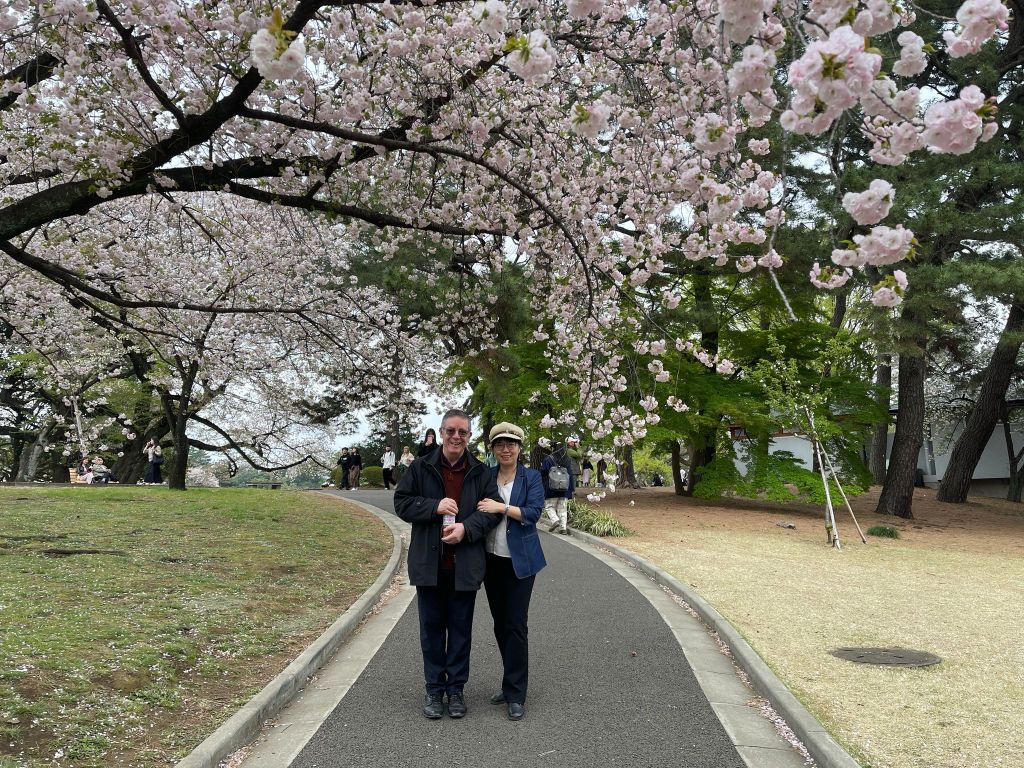
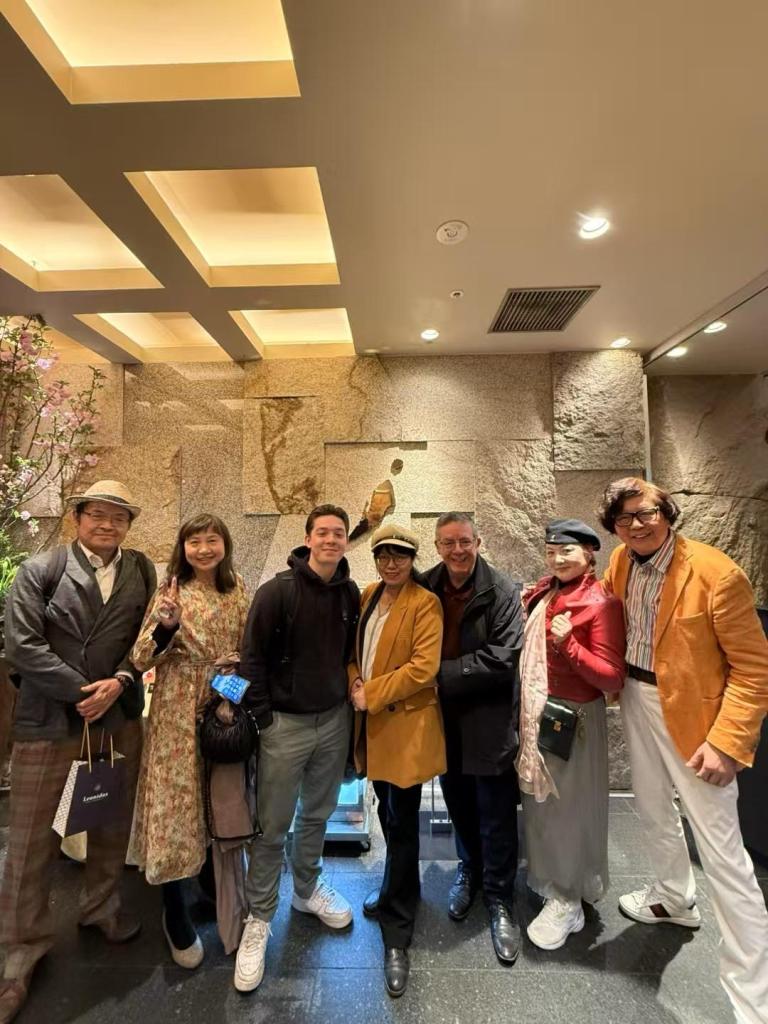
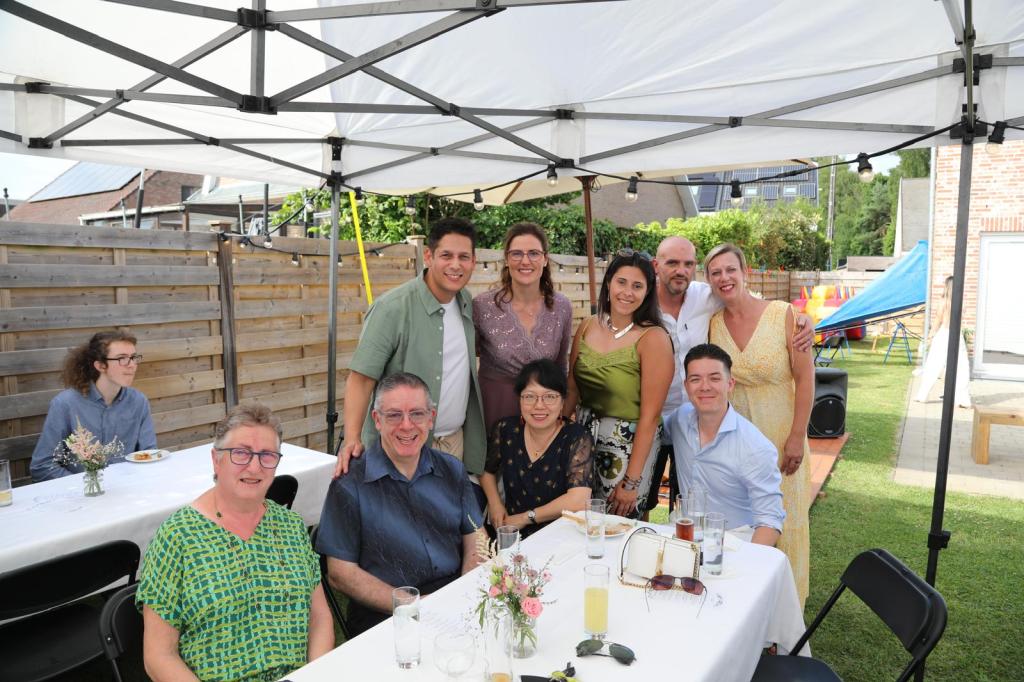
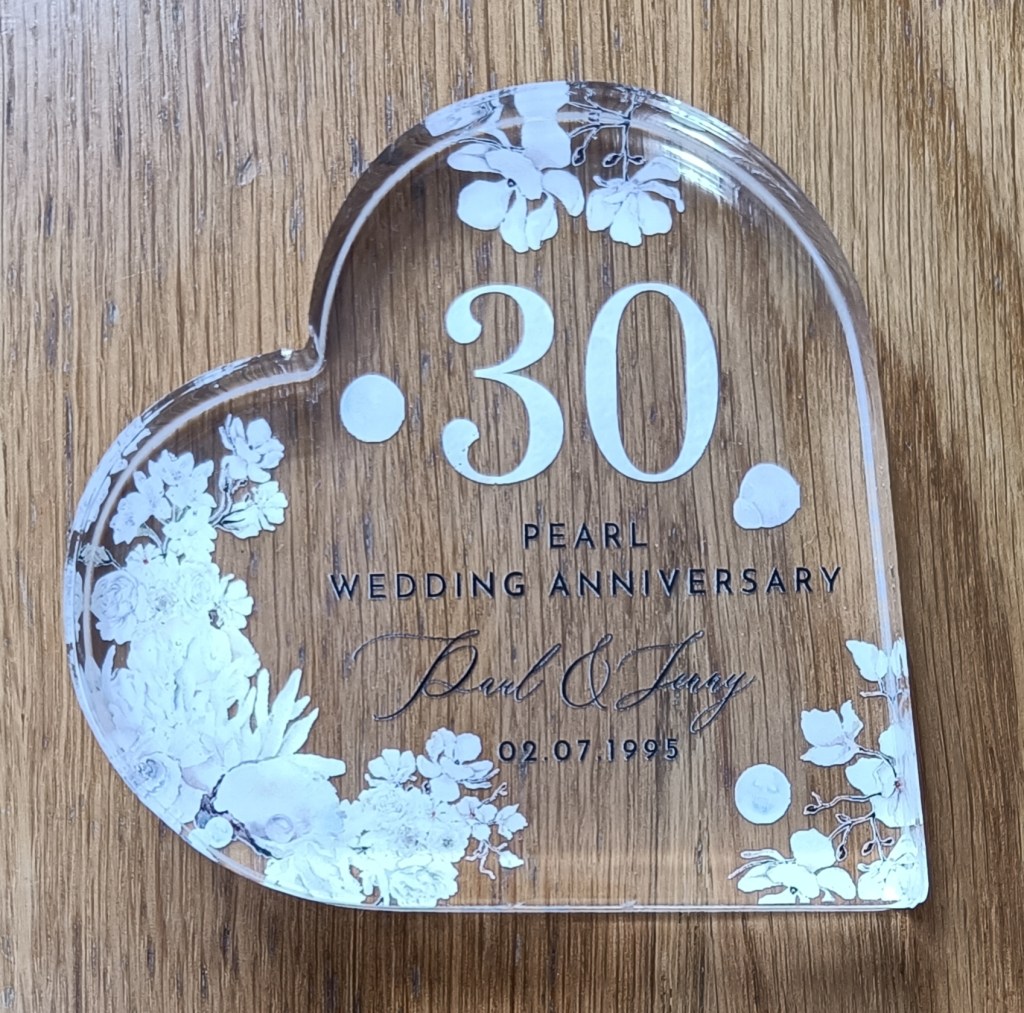
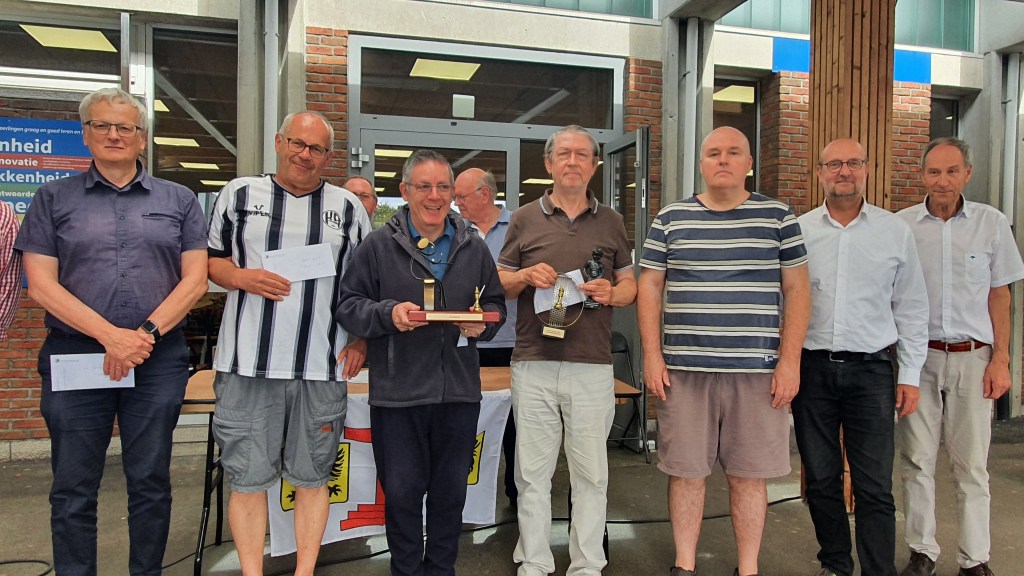
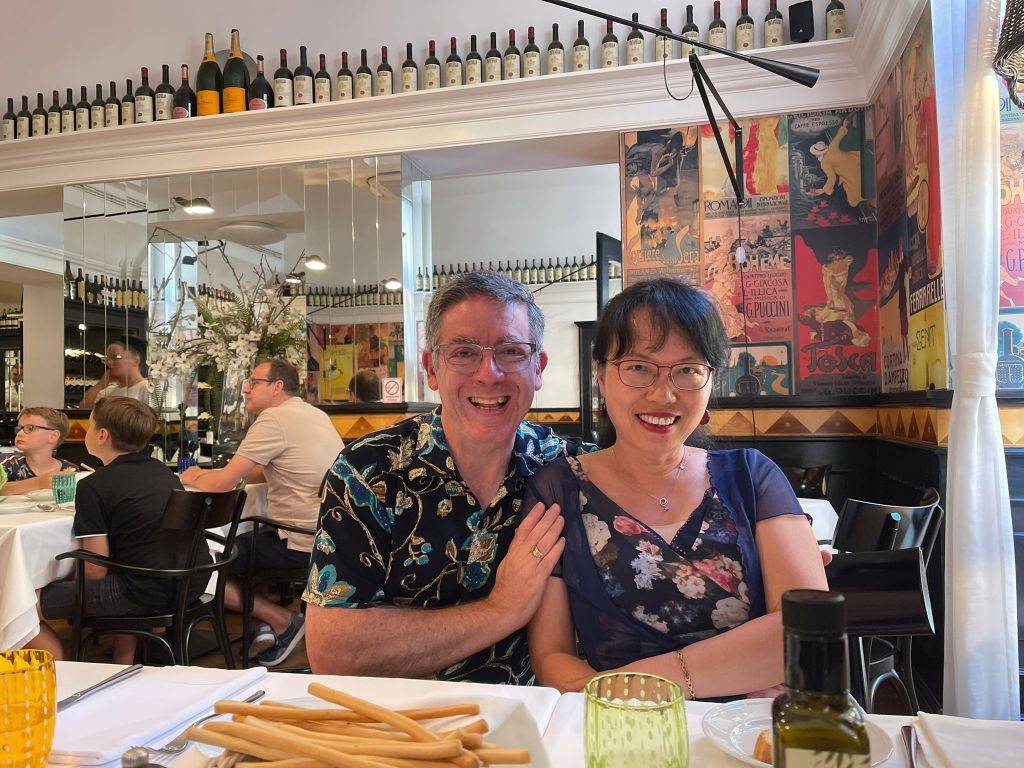
Beautiful Cherry Blossoms in Tokyo, Japan, in early April 😍Another lovely park in Tokyo 💕Celebrations with friends and relatives in Tokyo 🥰20th Wedding Anniversary Celebration in Buggenhout for Patrick & Roberta 🥰Celebrations with Patrick & Roberta 💕Jenny & I celebrated our Pearl Wedding Anniversary this summer 💕A beautiful Sunday morning ❤️Geraardsbergen Senior Chess Prizegiving Ceremony, 7 August 2025 😊
Special congratulations to Johan Krijgelmans (centre picture) for playing really fabulous Chess 👍
FM Johan Goormachtigh, Gerard Milort (or GM for short! 😁) and IM Aleksander Alienkin all played excellently, too 👌🥰
Many sincere thanks to Dirk Flamée (pictured above on the right & in photos below) and his wonderful team of expert arbiters and very kind assistants who make the annual tournament always so enjoyable and memorable 🥰
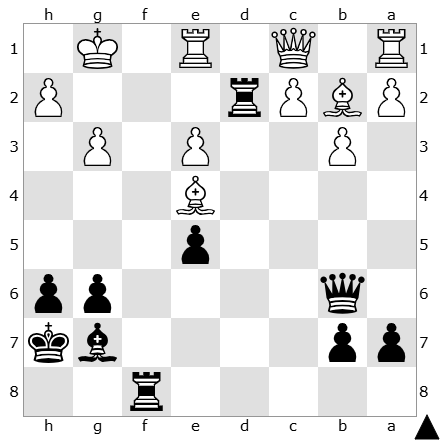
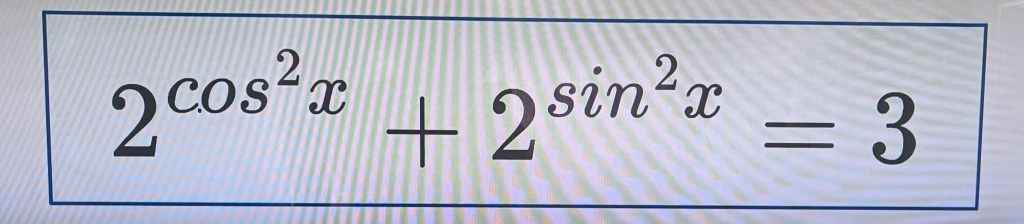
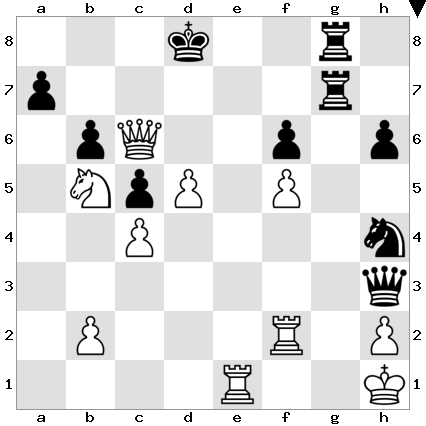
Marc Bils (pictured left, above) has been a superb arbiter at tournaments in Geraardsbergen for 32 years! 👌It’s Black to play and win beautifully 😍, from a training game that I had a few weeks ago Another beautiful puzzle that I saw (and solved! 😁) some weeks ago. Enjoy cracking it too! 👍My youngest niece (in England) is predicted to achieve A* results in all of her A-level subjects. Given her immense talent and super-hard work to make great use of everything, I think she’ll be smiling a lot when she receives her results tomorrow 😊😊😊 Then she, and other keen Maths enthusiasts, can enjoy solving the trigonometric exponential equation given above. No calculator is needed at all!
I’m very proud of my AS-Level Maths students at Musica Mundi School (MMS), for they all worked extremely hard and got well-earned, high results too 🙌😊
My IGCSE Maths students at MMS also worked hard, and their results will come from Cambridge next week.
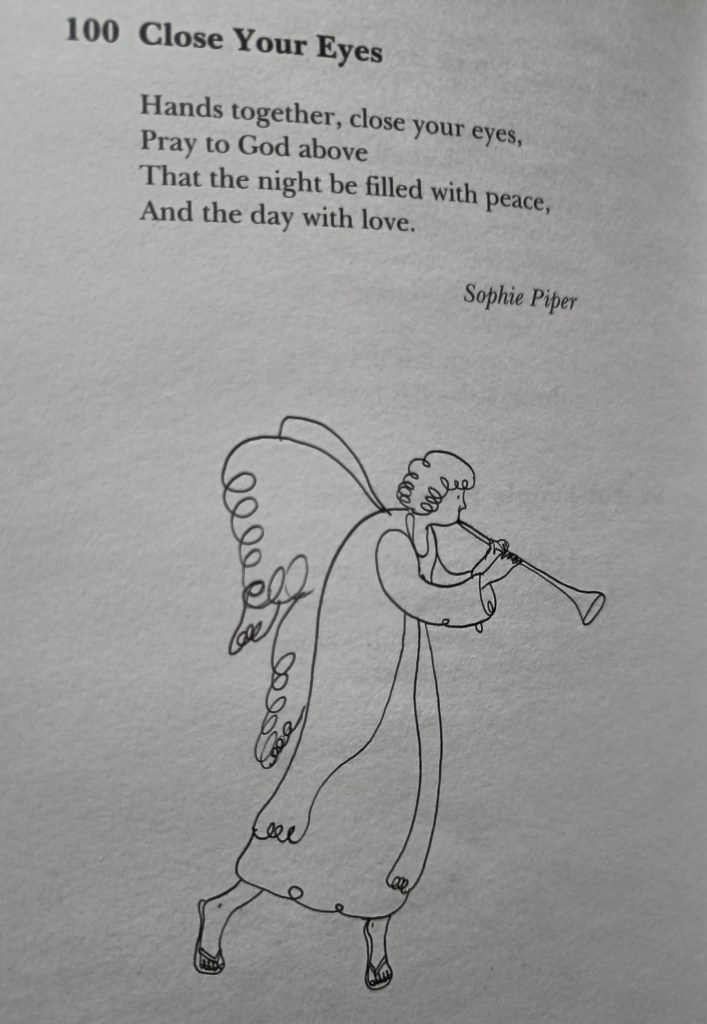
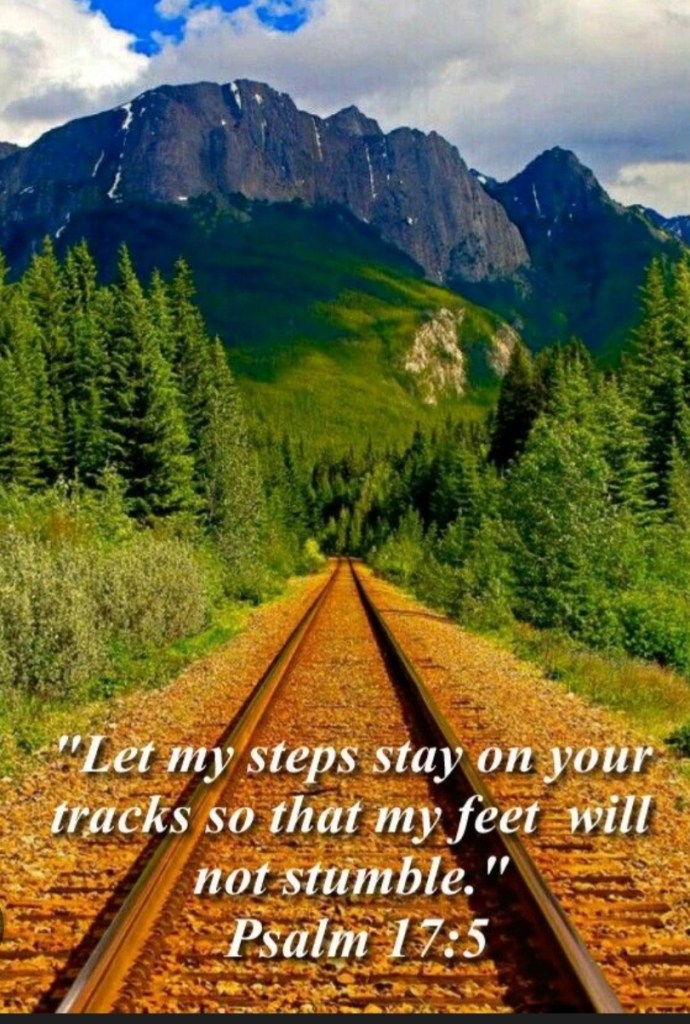
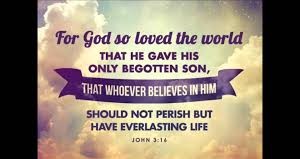
Prayer number 100 from a beautiful book of 1000 prayers that I bought in England this summer 🥰A beautiful Bible verse to conclude this Blog Post #175 ❤️
I have the pleasure of teaching Mathematics at Musica Mundi School (MMS) in Waterloo, Belgium. Today’s blog post is dedicated to Kate and Helen, two great colleagues whose birthdays are coming up very soon during the next school holiday break. The ladies collaborate excellently in their teaching of Global Perspectives, for example, and they are both very skilled in English language work, too, and so I think that they’ll enjoy the following anagram tribute in their honour. The 28 letters in FOR GREAT TEACHERS KATE AND HELEN rearrange perfectly to make AKA GREEN SECRET OF THE HEARTLAND 💚
Bible Psalm 17:2 ‘Let my sentence come forth from Thy presence; let Thine eyes behold the things that are equal.’
I thank God with all my heart for giving all the ideas contained in fresh, brand-new prize brainteasers here, which are certainly among my absolute favourites from my life, so far.
💚A Fresh ‘1970s’ Brainteaser In Honour of Kate and Helen 💚
Imagine that the total number of pages in a beautiful, big Global Perspectives book is N, a three-digit whole number in which all three digits are positive and different from each other. By rearranging the order of the digits in N, Kate is able to form five new, different three-digit whole numbers. Helen adds up Kate’s five new numbers and correctly finds that the total sum is Y, a year in the 1970s. That is, Y is a whole number somewhere between 1970 up to not more than 1979.
Your special brainteaser is to figure out, with proof, the exact value of N and the exact value of Y.
Note that this is a very precise mathematical brainteaser. There is no random guesswork involved, and though calculators may be used, they are not strictly required.
Anyone who knows me well, knows that 3 is my absolute favourite number of all 😊😊😊! So, I’m more than happy to now celebrate one other upcoming MMS birthday, in addition to those of Kate and Helen! Next Friday will be the birthday of Lovely Lara, a Hungarian student at the school.
💚A Fresh L-shape Brainteaser in Honour of Lovely Lara💚
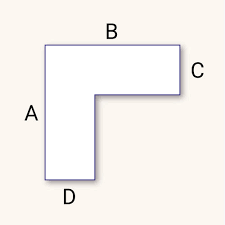
The image shows an inverted L-shape. Each line of the shape is either horizontal or vertical, just as you would expect from the appearance of the diagram. Assume that all the lengths of the lines are exact whole numbers of centimetres. However, note well that the diagram is certainly NOT drawn to scale!
Now, have a look at the horizontal line going across from the bottom of the side marked C. Imagine extending the left-end point of it with a dotted horizontal line to meet the side marked A. Also from the same left-end point, draw a dotted vertical line upwards to meet the side marked B. You may be wondering whether the wee shape that you’ve now formed in the top left area of the L-shape is a square… Well, yes, I’m declaring now that it is indeed a square!
You are now also told that the total area of the L-shape is L square centimetres, and the total outer perimeter is P centimetres (of course, don’t count any inner “dotted lines” described earlier as part of P; only count the outer perimeter of the L-shape).
Another super-important fact is: you are now given that L = P.
Your brainteaser in honour of Lovely Lara is to figure out, with proof, the exact value of L.
You are always very welcome to send me by email your answers to some or all of the goodies, if you would like to do so 👍💚😊
I will round off here with the beautiful Bible verse Matthew 17:2 ‘There He was transfigured before them. His face shone like the sun, and His clothes became as white as the light.’
The multiple purposes of this article include:- most sincerely wishing everyone a very blessed, happy New Year; writing about a wonderfully-organised international Chess festival which concluded on December 30 in Groningen in the North of The Netherlands; sharing some good fun freshly-created puzzles (involving Chess, Mathematics and more); sharing a vitally-important reflection which I honestly know more about, with certainty, than anything else I know. Indeed, it’s the duty of everyone who knows the Good News to share it with others, in the hope that they will come to love, respect and accept with gratitude to God the priceless gift which He offers freely to everyone. Peoples’ individual decisions to accept the gift (or not) will be of eternal importance, so it’s not something to ignore or delay.
A lovely Chess for Peace 💕 card given to me previously by Erik van de Wynkele
Since the age of 11, I have enjoyed taking part in nice Chess events during some of my ‘free’ time. Currently, I play competitive Chess only during school holidays, because throughout term times I dedicate a lot of time and energy to giving the highest quality of Mathematics teaching that I can for all of my students. Also, time with family and time to rest well is always important.
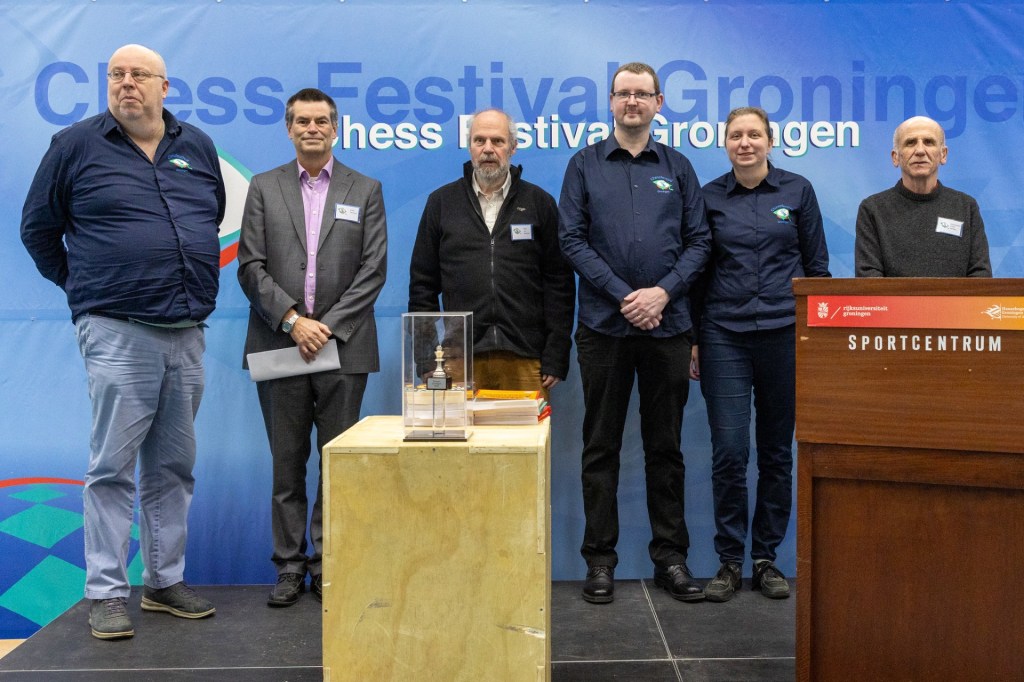
I am grateful to Mr. Govert Pellikaan and his fantastic team of organisers & arbiters who made the splendid Groningen Chess Festival run really smoothly for the enjoyment of around 400 people who took part. Meeting so many friendly people was a great pleasure.
Mr. Govert PellikaanPhotos by Harry Gielen. Pictured above is the team of arbiters.
Many participants chose for one of the 9-round Open sections, while some others opted for a 4-player, 3-round, all-play-all mini-group. Yet others (including myself) were more than happy with the possibility of playing in a compact 5-round event starting on Boxing Day (26 December). Whichever event one chooses for, it’s highly appealing that its schedule requires just one game per day.
Everyone plays together in a lovely, spacious hall. Drinks, snacks and meals are readily available within the analysis room of the same building, at good prices.
A superb Chess bookstall is provided by Robert Klomp and his wife, WGM Erika Sziva, whose website is http://www.debestezet.nl 👍❤️ The thriving business was founded in 1994.
I was delighted to win the Senior Tournament with 5/5, and the next day my wife (Jenny) and I celebrated New Year’s Eve at the home of Robert & Erika in the Dutch town of Best, where we stayed until the evening of New Year’s Day—a favourite, long-standing tradition with our families 😊😊
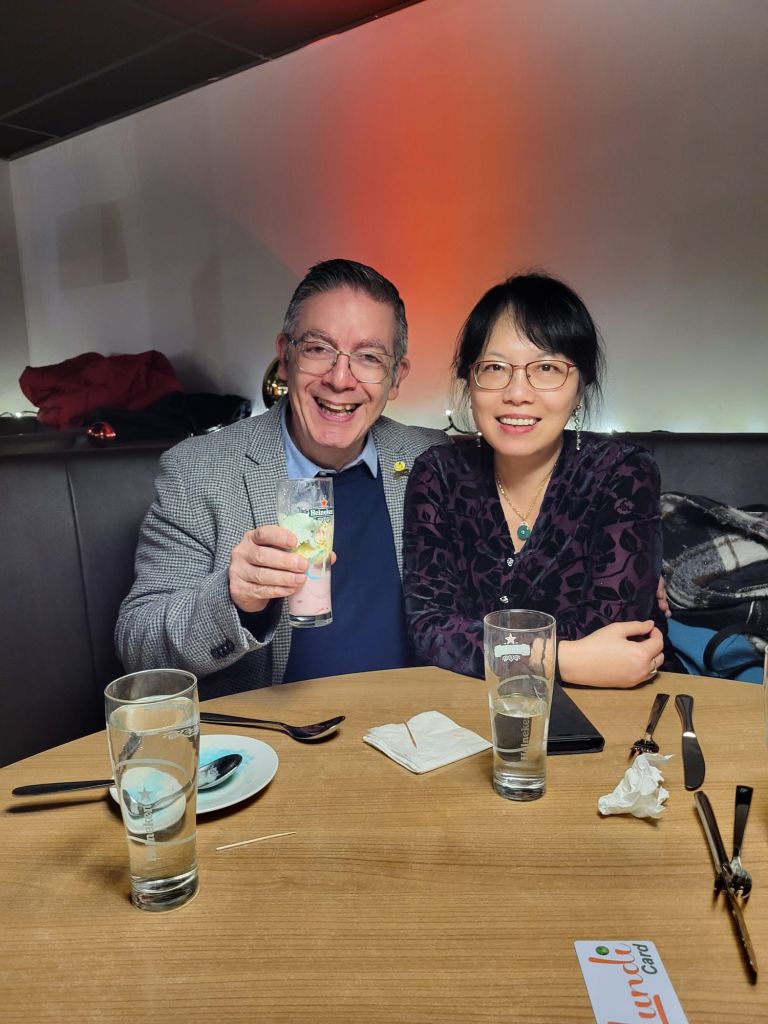
A typically stunning photo 😍 by Erika, who is extremely talented.Robert & Erika having fun! 😁We all tried to remain well-balanced!! 🤣😂Jenny & I celebrating the New Year in The Netherlands 💕We named this photo ‘Orange Peace’ 😊 Orange is a national colour in The Netherlands.Imagine a great Chess board with its unit squares numbered from 1 to 64. Jenny and I have gone a long way to reach number 63, with some special thoughts in mind… for bringing you six threes with a sneaky, fun twist! Think of the year 1925, from a century ago. Reverse its digits to get 5291. Multiply by 63, and the result is a super six-digit string 333333 consisting entirely of 3s; my absolute favourite! 😁
Question: How can you use the numbers 100, 64, 3 and my house-number 11 to get 21.12, to remind you of December 21, the date when the annual Groningen Chess Festival begins?
Answer: 64 x 3 x 11 ÷ 100 = 21.12 👍😁
Word Puzzle: Can you read my mind and rearrange the 18 letters of CONGRESS BEGINS THEN to make 3 other very particular words!?
Photo by Bart Beijer
Answer: I was thinking of
CONGRESS BEGINS THEN =
BEST GRONINGEN CHESS 👍😊❤️
Nice Number Puzzle: Why is today, 3.1.25, a nice day for me to gratefully celebrate a 5/5 result?
Me with International Master Vadim Cernov, who was the runner-up on 4/5 in the Senior Tournament.
Answer: 5 to the power of 5 equals 3125 🙌😁
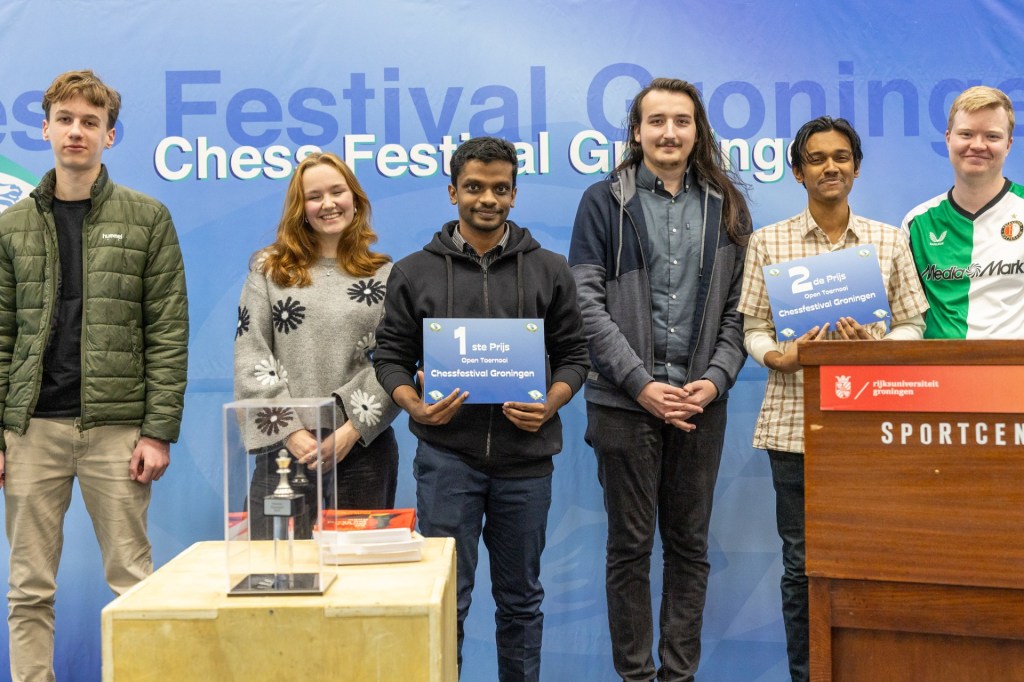
IM Arthur De Winter, WGM Machteld Van Foreest (who achieved an IM norm—warm congratulations! 👍😊), GM S.L.Naranyan, IM Theo Stijve, IM Anto Cristiano F Manish and GM Thomas Beersden were 6 of the top 7 prizewinners in the Open A-Group. IM Nick Maatman would also have been pictured, but he had had to leave, sick.
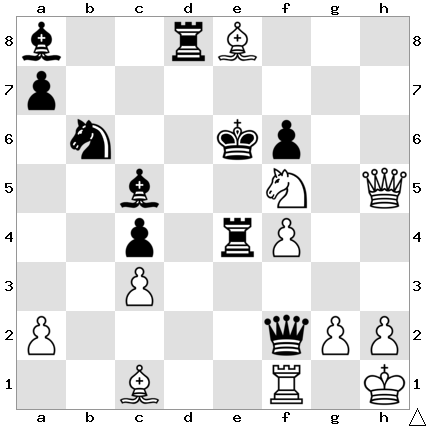
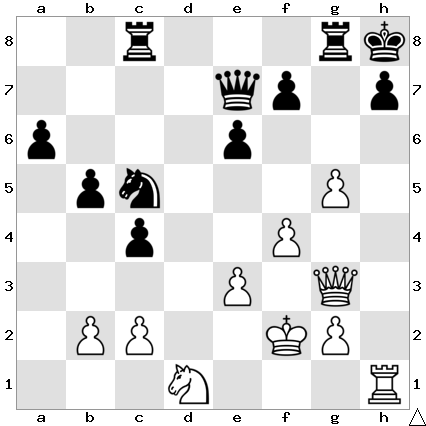
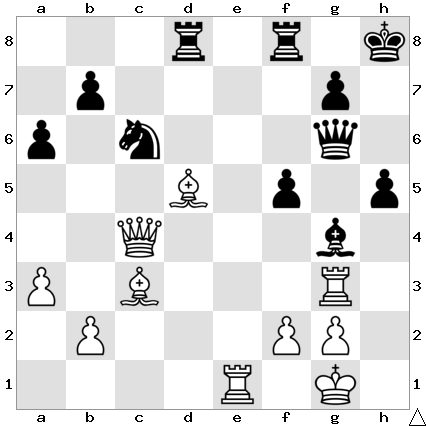
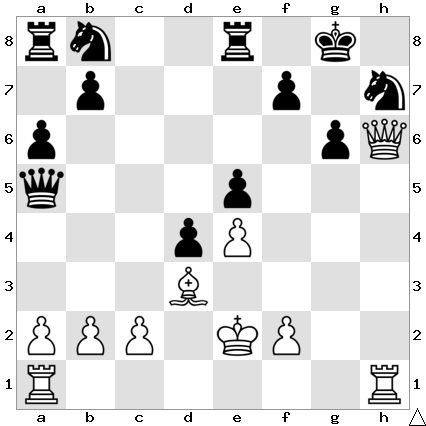
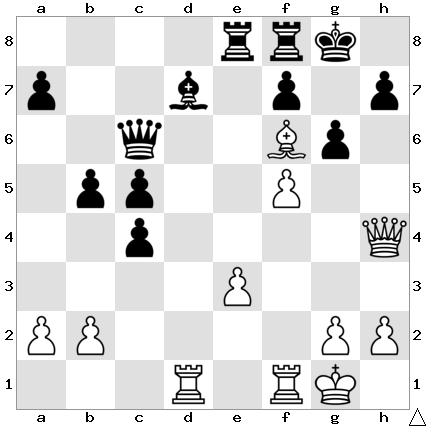
Given that 17-year-old Machteld Van Foreest is a local player from Groningen, her IM norm achievement was a particularly popular result. Today, I have been enjoying playing through some of Machteld’s earlier victories from 2024. I have chosen the following position from the Dutch League, in which it was Machteld as White to play and win by force…and she did so! 😁
The game ended crisply with 1 Re6! Qg5 2 f4! 1-0. Black resigned in view of 2…Qh4 3 Rh6#. It’s true that 1…Qh7 would have been more tenacious, but White would still have won comfortably with 2 Qf4!, intending 2…Rxd5 3 Rh6.
Literally hundreds of great photos were taken by Bart Beijer and Harry Gielen at the tournament. Though I can’t feature all of them here, I do want to congratulate most sincerely every person who was there in Groningen, for everyone’s presence contributed to making an unforgettable event 💕
It was especially nice for me to see Mr. Johan Zwanepol, who was the main organiser when I previously played in Groningen in 1979, 1980, 1989 and 1990 😊
Mr. Johan Zwanepol presenting the Open A-Group Winner’s Trophy to Indian GM S. L. Naranyan 👌😊❤️13-year-old Scottish super-talent Rishi Vijayakumar very nearly achieved an IM norm. He still deserves ’10/10′ for excellent, courageous play. Rishi loves Maths, too. So, here comes a nice puzzle in his honour…
Without needing to use a calculator or any other external aids, can you figure out mentally the exact value of the square root of (1+3+5+…+2023+2025)?
The key secret is that the total sum of 1+3+5+…+the nth odd number
always equals n squared exactly. Since 2025 = 2 x 10¹³ – 1, we can know that 2025 is the 1013th odd number. So, 1+3+5+…+2023+2025 must equal exactly 1013 squared. Taking the square root leaves us with 1013 in honour of 13-year-old Rishi (to whom I awarded 10 points) 🙌😊
Chess Helpmate Puzzle
A delightful Chess puzzle which I saw posted on Facebook recently.
It’s Black to play and co-operate fully in a Helpmate in six moves! That is, Black starts a co-operative sequence which ends with White delivering checkmate on his 6th move. Can you do as well as Problem-Solving Chess Grandmaster Dolf Wissmann by cracking the puzzle in under a minute!? 👌
Solution:
Once we realise that the required end-position is this one, it becomes much easier to figure out that it can be reached from the puzzle’s starting position via the sequence 1…g5 2 Kf2 g4 3 Ke3 g3 4 Kd4 g2 5 Kxd5 g1=B 6 Kc6 Ba7 7 Kc7#
Bonus Two-Part Fantasy Chess Puzzle 💕
What is the maximum number of rooks which can be placed on an empty Chess board such that none of them are attacking each other?
What is the maximum number of knights which can be placed on an empty Chess board such that none of them are attacking each other?
Answers
Eight rooks, placed on a common long diagonal of a Chess board, will not be attacking each other.
32 knights, either all on dark squares or all on light squares, will not be attacking each other.
Happy New Year Wishes from Paul, Jenny & Michael Motwani ❤️❤️❤️
A Happy New Year Trigonometry Puzzle In Honour of
Chief Arbiter Erwin Denissen, who is also a Mathematics Teacher
Photo by Bart Beijer of Erwin Denissen & Harry Gielen 👍👍
Without needing to use a calculator or any other external aids, figure out mentally the exact value of the square root of sin 2025° * cos 2025° * tan 2025°
Answer:
sin x° * cos x° * tan x° = sin x° * cos x° * (sin x° ÷ cos x°) = (sin x°) squared, and so its square root will be the absolute value of sin x°.
sin 2025° = sin (5 x 360 + 225)° = sin 225° = -sin 45° = -1/sqrt 2.
Its absolute value is 1/sqrt 2 or equivalently (sqrt 2) ÷ 2.
Another Sneaky Square Root Surprise!
Think about the square root of 2025. What surprise do we get if we increase each digit of 2025 by 1 and then take the square root?
Answer: The square root of 2025 is 45. The square root of 3136 is 56. Both digits in the answer increased by 1, too! 😁
I will round off this article with one final nice photo and a beautiful, true quotation.
“You pay God a compliment by asking great things of Him”—St. Teresa of Avila 💕
In the previous blog post, I featured ‘The Saints’ Little Book of Wisdom’, which is such a precious gem of a book that I am very warmly recommending it again here, to everyone. There are so many good things to learn by reflecting on and practising in our lives the pearls of wisdom contained in the book.
In addition to the quotes within the lovely image above, another favourite of mine from St. Teresa of Avila is: “You pay God a compliment by asking great things of Him.” 💕
As usual, I also have several good-fun puzzles to share 👍😊
A Kettle Puzzle! 😊
My kettle at home displays 100 when the water in it boils. Afterwards, as the water cools gradually, the display number drops by 1 unit (degree Celsius) at a time, until it finally settles at around room temperature.
Looking at the photo above, I said to myself, “The temperature has dropped by 72° (from 100°) down to 28°. 72 x 28 = 2016.”
Kettle Puzzle Part 1
If I were to observe the temperature all the way while it dropped from 100°, and at each moment calculate
Temperature drop from 100 x Temperature displayed
what would be the maximum result that I could get like that? ✔️👏
Kettle Puzzle Part 2
The example result of 2016 (given above) ends with a 6. What is the probability that I could get a result ending in my favourite 3? 😍
(Please assume that I do my calculations correctly!!)
Cheers to Chess Puzzle!
Instead of drinking hot chocolate as in the photo above, I often drink delicious Musica Mundi School apple juice while I’m enjoying Chess with the students.
Suppose that 46 students drink a collective total of 350 cups of apple juice, and they all drink at least one cup each.
Cheers to Chess Puzzle, Part 1
As a very reasonable mental Maths exercise (without using any calculator), figure out, correct to 1 decimal place, the Mean (Average) number of cups of apple juice drunk per student.
Try to write a sentence or two to describe clearly the method you used to figure out your answer mentally. 👍
Cheers to Chess Puzzle, Part 2–A Brainteaser!! 😘
Given the information stated before Part 1, what is the maximum possible value for the Median number of cups drunk?
Cheers to Chess Puzzle, Part 3
If the maximum possible Median actually occurs, then what is the Modal number of cups drunk?
Also, what is then the Range = Maximum – Minimum number of cups drunk?
Welcome to Misato, Puzzle!
Misato, our newest wonderful student at Musica Mundi School, came all the way from Australia to Belgium this week. Helen, one of the English teachers, told me that Misato is really strong in her subject. So, I made now a nice word puzzle in honour of Misato.
Word Puzzle for Misato, Part 1
Remove just the letter A from MISATO, and then rearrange the remaining 5 letters to make a proper 5-letter English word. Try to find two different, correct solutions. ✔️👍
Word Puzzle for Misato, Part 2
Remove just the letter I from MISATO, and then rearrange the remaining 5 letters to make a proper 5-letter English word. Again, try to find two different, correct solutions. 👏
A Cute Double Checkmate Chess Puzzle!!
If it’s Black to move, checkmate can be forced in 5 moves.
If it’s White to move, checkmate can be forced in 4 moves.
Have fun solving that cute double checkmate Chess puzzle!! 😍
It’s my intention to publish solutions to all the puzzles around the time that blog post #161 comes out, God-willing as always. (Before then, I will finally publish solutions to the puzzles of blog post #159 !) By the way, without needing to calculate the result, which of the numbers 159, 160 or 161 equals the sum of the first eleven prime numbers (given that one of them is correct)!?
Please do feel free to send me your best solutions to any or all of the puzzles, if you like 😊.
I would like to round off this article by most sincerely wishing you a very blessed month of November soon, with lots of happiness in everything that you do ❤.
With kindest wishes as always,
Paul M😊twani ❤
“In all created things, discern the providence and wisdom of God, and in all things give Him thanks”–St. Teresa of Avila.
P.S. = Puzzle Solutions (being posted now on 30 November 2023)
Kettle Puzzle Part 1: Maximum-possible result = 50 x 50 =2500.
Kettle Puzzle Part 2: None of the results in this particular Maths “story” can ever end with a digit 3, and so the probability of such a result occurring is simply zero. (Basically, it was a “trick question”!! 😁)
Cheers to Chess Puzzle, Part 1: To calculate 350 ÷ 46 mentally, one method is as follows…
7 x 46 = 7 x (50 – 4) = 350 – 28 = 322, with 28 still “to spare” from the 350 cups in the puzzle.
Next, 28 ÷ 46
= (23 + 5) ÷ 46
= (46/2) ÷ 46 + (4.6 + 0.4) ÷ 46
= 1/2 + 1/10 + nearly 1/100
= 0.5 + 0.1 + less than 0.01.
Putting that together with the chunky 7 found earlier…
the correct quotient result for 350 ÷ 46 will be…
7.6 for the Mean, correct to 1 decimal place ✔️
Cheers to Chess Puzzle, Part 2: Imagine the 46 students lined up in order, starting with the students who drank the least number of cups, and then going all the way up to the students who drank the most. The Median will be found in the middle of the long line by calculating
(the total number of cups drunk by Student #23 & Student #24) ÷ 2.
To maximise that result, let the first 22 students drink only 1 cup each (not zero, though, because we were told that everyone drank at least one cup each). Then, we have retained 328 cups to share amongst the final 24 students.
328 ÷ 24 = 13.7 (approx.), and so the most that we can allocate to Student #23 is 13 cups (whole number).
Then 315 cups still left ÷ 23 students = 13.7 cups per student (approx.), and so the most that we can allocate to Student #24 is again 13 cups (to also have a whole number of cups for him or her).
Therefore, the maximum-possible Median = (13 +13) ÷ 2 = 13 cups. 👌
Cheers to Chess Puzzle, Part 3: Following on directly from everything written in Part 2 above, imagine that we just give Students #25 up to #46 only 13 cups each. We’ll have “used up” 22 x 1 + 24 x 13 = 334 cups with just 16 cups still “to spare” from the total of 350.
At that moment, 22 students have 1 cup each & 24 students have 13 cups each (and we’ll get to the spare 16 in a wee moment!). As things stand right now, the mode is 13. It’s the “winner”!
Can any other number overtake it in popularity, by using the “spare” 16 cups…?
Well, if (for example) we bumped up 16 of the numbers 13 each to 14, then we’d have this situation: 22 students with 1 cup each, 8 students with 13 cups each, and 16 students with 14 cups each. The mode in that case would be 1.
To illustrate a couple of other alternatives…we could have 6 students with 1 cup each, 16 students with 2 cups each, and 24 students with 13 cups each. The mode in that case would be 13.
We might alternatively have 22 students with 1 cup each, 22 students with 13 cups each, and 2 students with a “lucky 21” cups each! The joint winners there for popularity are 1 and 13: they are both modes in this case, and in summary they are the only possible modes when the maximum median of 13 occurs. 👍
Word Puzzle for Misato, Part 1
MISATO – A = MOIST or OMITS.
Word Puzzle for Misato, Part 2
MISATO – I = ATOMS or MOATS or STOMA. 👏
A Cute Double Checkmate Chess Puzzle!!
If it’s Black to move, checkmate can be forced in 5 moves with 1…Rg1+! 2 Rxg1 Rxg1+ 3 Kxg1 Qg4+ 4 Kh1 (longer than 4 Rg2 Qxg2#) 4…Qd1+ 5 Rf1 Qxf1#.
If it’s White to move, checkmate can be forced in 4 moves with 1 Qa8+ Kd7 2 Qb7+ Kd8 3 Qb8+ Kd7 4 Qc7#. 😍
Regarding the sum of the first eleven prime numbers, 2+3+5+7+11+13+17+19+23+29+31=160. Even without calculating the actual result, we could know that it had to be even, because ten odd numbers make 5 pairs of odd numbers, equivalent to a sum of 5 even numbers. That has to be even, and adding on 2 (the smallest prime, and the only even prime) keeps the total even for sure. 😊
I try to be grateful always for every moment that God grants, and this summer was filled with wonderful people, places, events and countless other blessings.
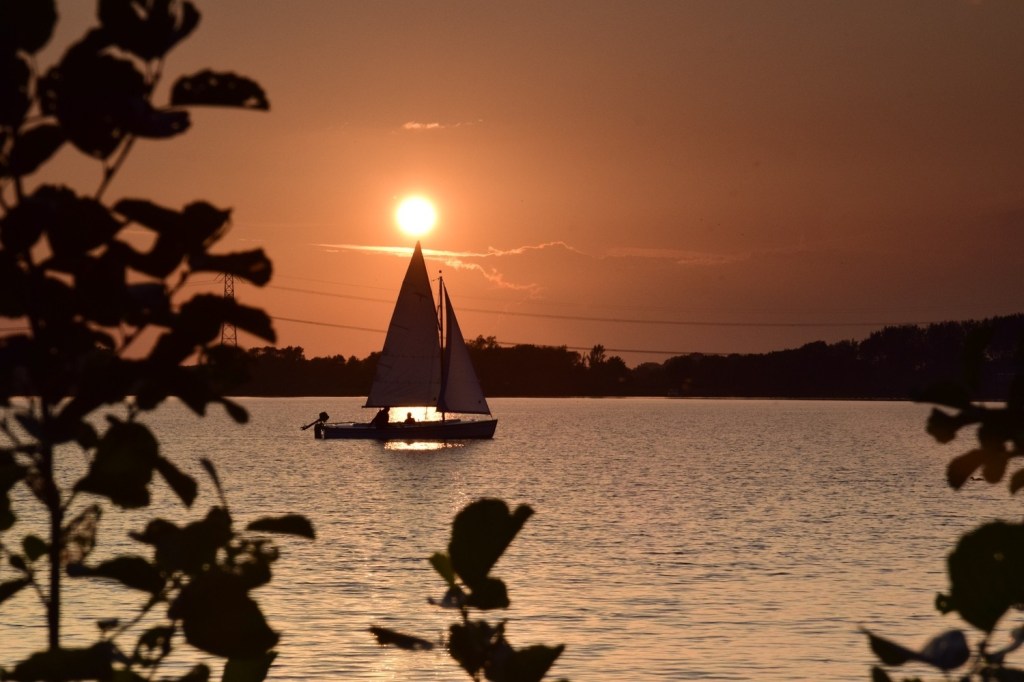
On holiday in Croatia; sunset in Zadar ♥Our first evening, in Dubrovnik ♥
Just one of the special companions for me during three open international Chess tournaments–one in Germany and two in Belgium–was The Saints’ Little Book of Wisdom (compiled by Andrea Kirk Assaf).
One of my absolute favourite quotations from this gem of a book is: “Every moment comes to us pregnant with a command from God, only to pass on and plunge into eternity, there to remain forever what we have made of it.”–St. Francis de Sales ♥1st= on 6 out of 7 (5 wins & 2 draws) at the Senior International Open Chess Championship in Magdeburg, Germany ♥ Everywhere I went this summer, I was delighted to make many new friends, and meet up with great old friends too.The Belgian Senior International Open Chess Championship, Round 2 on 7.8.2023 ♥Belgian Senior International Open Chess Championship Prizegiving 1st= on 4.5 out of 5 😊2nd= on 7.5 out of 9 (6 wins & 3 draws) at the Belgian International Open Rapid Speed Chess Championship. I’m pictured there with International Arbiter, Geert Bailleul 😊Paul & Jenny pictured at Krk Island, Croatia ♥Paul & Jenny during a nice walk in Zagreb, Croatia ♥Paul & Jenny at a lovely restaurant during the final evening in Zagreb ♥Beautiful Night at the Atomium ♥
Creative Puzzles Time!! ✔👌😎
Puzzle #1, Part 1
Write down the proper English name for the mathematical 3D shape shown above. Then rearrange the letters of the name to make another proper English word 👍
Puzzle #1, Part 2
Suppose that, in the diagram above, the dimensions r, h and L are all whole numbers of centimetres.
Part 2.1: Explain how you can then be absolutely sure that r, h and L must all be different, distinct numbers.
Part 2.2: Also, what is then the absolute minimum possible value for
the sum r + h + L?
Part 2.3 Brainteaser:
Thinking ahead with hope to blog post #160 (God-willing as always), can you discover suitable whole number values for r, h and L such that r + h + L = 160?
Puzzle #2
Think back to Blog Post #158…Can you discover a fitting reason for why June 7 was the perfect date for that post to be published?
Puzzle #3(Brainteaser)
Suppose that Beethoven is writing down the same one-digit whole numbers that friends Jens, David, Jan, Herman, Peter and Paul are thinking of. Among us six seated friends, it turns out that we are all thinking of the same number…except for Paul! So, five of our numbers are identical; only Paul’s number is different. When Beethoven multiplies the six numbers together correctly, he gets a particular year that was just the second year of a certain century in the past. Exactly what year does Beethoven get in this puzzle!? 👏
Very warm congratulations to my niece in England on achieving fabulous top results in all of her national exams this summer 👏 Hearty congratulations also to every one of my Musica Mundi School students who sat Cambridge Mathematics exams this year, as they all succeeded really well 👍😎
Suppose that my niece in England and her dad play almost 100 Chess games together. To encourage really good, combative play, I award three points for a win, 1 point each for a draw, no points for a loss. After all the games have been played and points have been duly awarded according to the results, we calculate
Total Points of the Two Players ÷ Number of Chess Games they Played.
In their case, that turns out to be a decimal number a.b, in which ‘a’ is the whole number part, and ‘b’ is the one-digit decimal part.
If we convert the decimal number a.b to a fraction in its simplest form, we get c/d, where c and d are prime numbers, and a, b, c and d are all different.
Given the information above, your Sunset Girl Mega-Brainteaser in honour of my niece is to figure out the exact maximum-possible number of games of Chess that she played with her dad. Also, exactly how many of those games ended with a decisive win/loss result, and exactly how many of the games ended as draws?
Puzzle #5: Checkmate! 😃
It’s White to play & win by force in a real Grandmaster clash from 1962, the year when I was born 💖
It’s my intention to publish solutions to all the puzzles around the time that blog post #160 comes out, God-willing as always. (Before then, I will finally publish solutions to the puzzles of blog post #158 !)
In the meantime, please do feel free to send me your best solutions to any or all of the puzzles, if you like 😊.
I would like to round off this article by most sincerely wishing you a very blessed month of September soon, with lots of happiness in everything that you do ❤.
With kindest wishes as always,
Paul M😊twani ❤
“As gifts increase in you, let your humility grow, for you must consider that everything is given to you on loan, from God”–St. Pio of Pietrelcina.
“The secret of happiness is to live moment by moment and to thank God for all that He, in His goodness, sends to us day after day”–St. Gianna Beretta Molla.
P.S. = Puzzle Solutions (being published now on 30 October 2023)
CONE→ONCE.
Pythagoras’ Theorem tells us that L2=r2+h2.
There are, of course, cases in which it’s possible for r and h to equal each other,
but then L2 = 2r2
and so L = √2*r.
That’s not possible if L, r and h have to all be whole numbers (because √2, the square root of 2, is an irrational number).
Therefore, if L, r and h are positive whole-number dimensions on the cone, they must all be different from each other, and the slant height L must be greater than r and also greater than h.
In that case, the minimum-possible value for r+h+L is 3+4+5 = 12.
The consecutive whole numbers 3, 4, 5 form the most famous Pythagorean Triple: 32+42=52.
Whole numbers fitting the challenge r+h+L=160 are 32, 60 & 68. Note that 322+602=682. Also, the numbers 32, 60, 68 are four times larger than the famous 8, 15, 17 Pythagorean Triple in which 8+15+17=40.
June 7 was the perfect day for Blog Post #158 to be published because it was the 158th day of 2023.
Beethoven would get 1701 (the second year of the 18th century) by correctly calculating 3 x 3 x 3 x 3 x 3 x 7.
In the brainteaser about Chess games, a.b = 2.6 = 13/5 = c/d.
a=2, b=6, c=13, d=5 with c and d being prime, as was stated in the puzzle.
60% of all the games end decisively and 40% of all the games are draws, which is why a.b = 2.6 or 3 – 0.4. (If all the games had ended decisively, then a.b would have reached its maximum-possible value of 3.)
The maximum-possible number of games (less than 100) is n=95, of which 60%→57 games are decisive wins and 40%→38 games are draws. Note: We wouldn’t get whole numbers there if n wasn’t a multiple of 5.
In the puzzle about Chess moves from 1962, White can win with 1 Qe6! Qxe6 2 Rxh7#, a neat checkmate! 👍😊💖
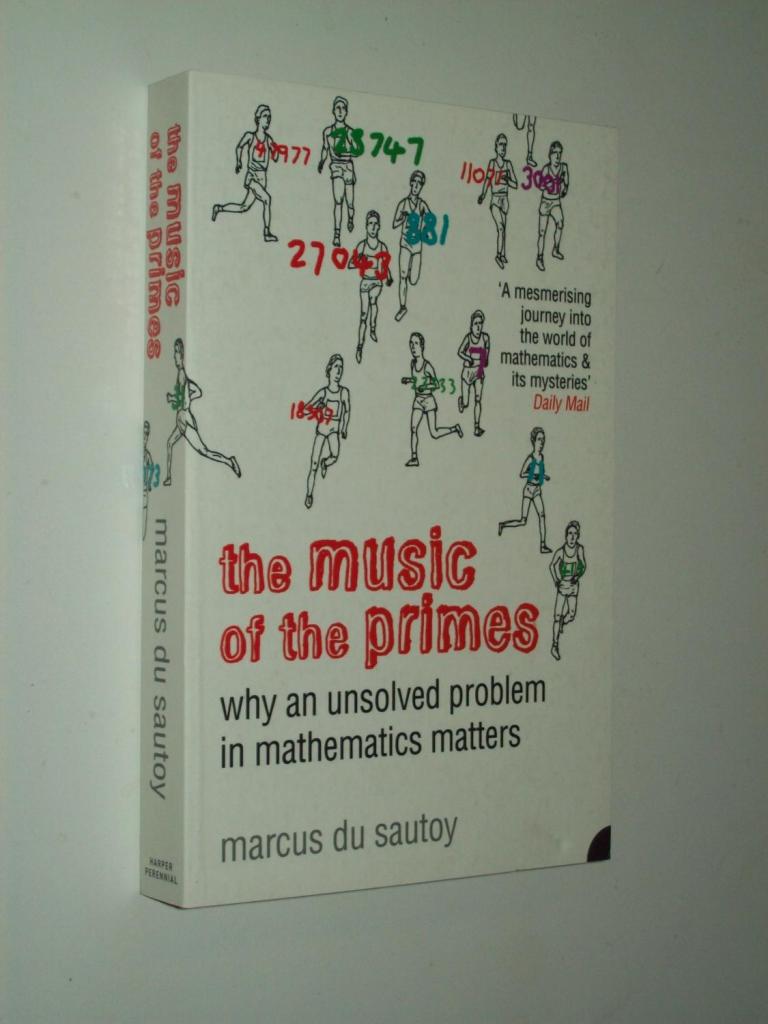
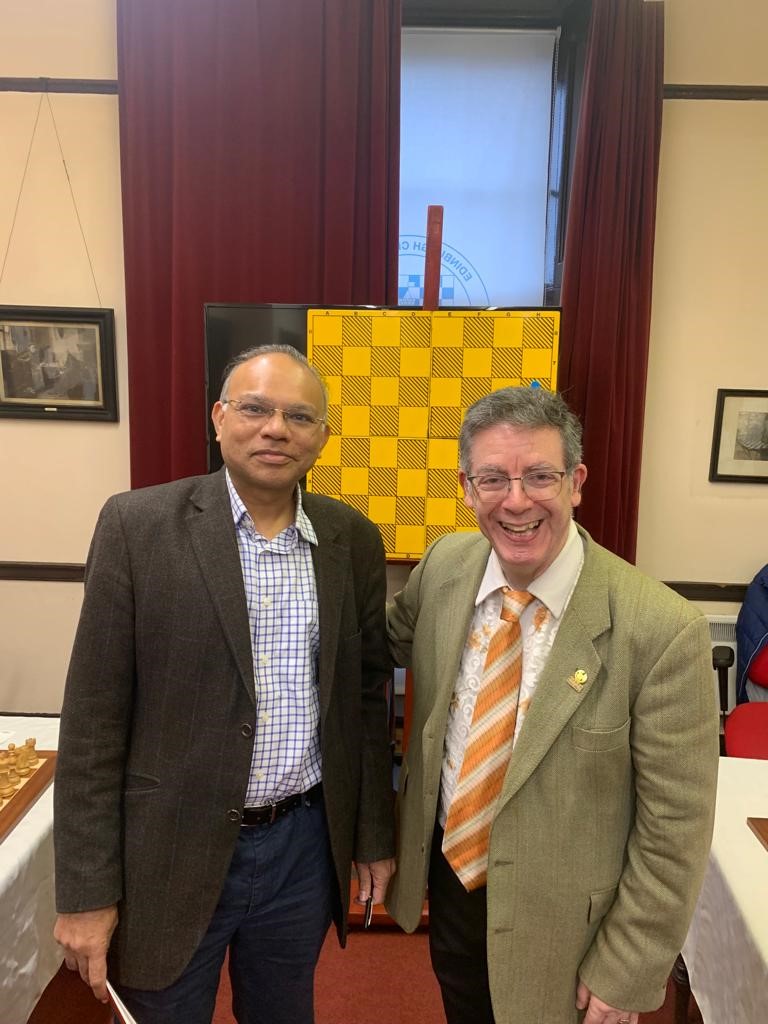
This article is specially dedicated to Dr. Vipin Zamvar, a consultant cardiothoracic surgeon who certainly has a really good heart, in the kindest, very best sense ❤. Vipin is originally from Mumbai, India, but now lives in Edinburgh, and my family and I had the pleasure of meeting the gentleman doctor in Scotland’s beautiful capital city through an event at Edinburgh Chess Club last October. We thoroughly enjoyed chatting with Vipin during dinner that evening, and when he kindly gave us a lift to our hotel afterwards. In addition to sharing the ‘Royal Game’ of Chess as a fine hobby, we also like Mathematics, and I am currently reading ‘The Music of the Primes’ which Vipin sent as a lovely gift book.
I would like to now offer several fresh brainteasers for the enjoyment of Vipin and all puzzle fans! 😊❤😊
Start with the number 152 here in Blog Post #152.
Multiply it by my favourite number, 3, and then add 3.
If you divide the result by Vipin’s favourite whole number, you’ll then have a prime number.
What exactly is Vipin’s favourite whole number (given that it is not more than 152) ?
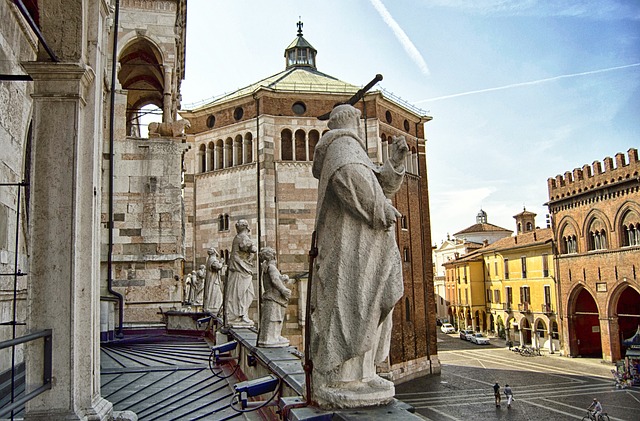
2. Rearrange the letters of CREMONA (a beautiful city in Italy) to make a proper 7-letter English word. The nice seven-letter word – – – – – – – has a connection to Vipin because he chose his favourite number for the reason that it was part of the date on which he first met his wife ❤
What a lovely couple! We see Vipin and his wife, Usha, pictured in Coimbatore, India 💖💖
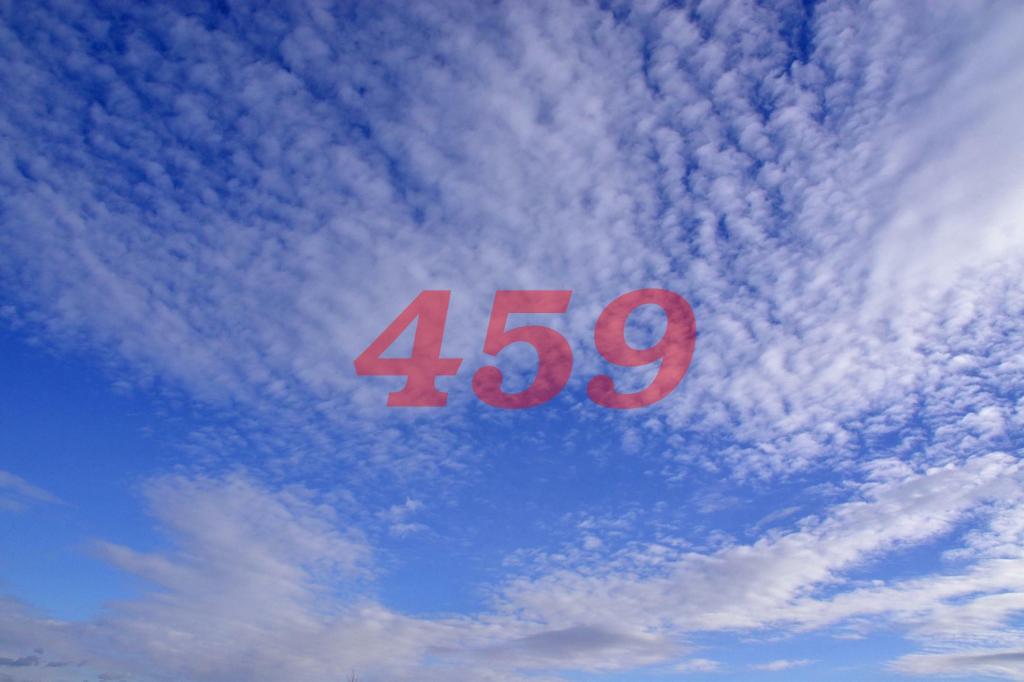
3. We already encountered the number 459 in the first puzzle (when doing 152 x 3 + 3), and now imagine that Vipin selects either 4 or 5 or 9. Let’s call his selected number V. Vipin will raise V to the power of his wife’s age now, and he’ll note the result. Vipin will also raise V to the power of his wife’s future age on her next birthday, and again he’ll note the result. Vipin will add his two results together to get a new, larger result, Z.
What exactly will be the units (or ‘ones’) digit of the number Z?
Can you prove what the digit will be?
4. Imagine a long bus travelling at a constant speed through a tunnel in India that is nearly 1km long. (The tunnel length is in fact a whole number of metres between 900 and 1000. The length of the bus is also a whole number of metres.) From the moment that the front of the bus enters the tunnel, the time taken for the entire bus to be inside the tunnel is t seconds. However, the time taken for the entire bus to pass through the tunnel is t minutes.
What is the exact length of the tunnel?
5. Now it’s time for an ABCD puzzle to wish you A Beautiful Creative Day!
😊❤❤😊
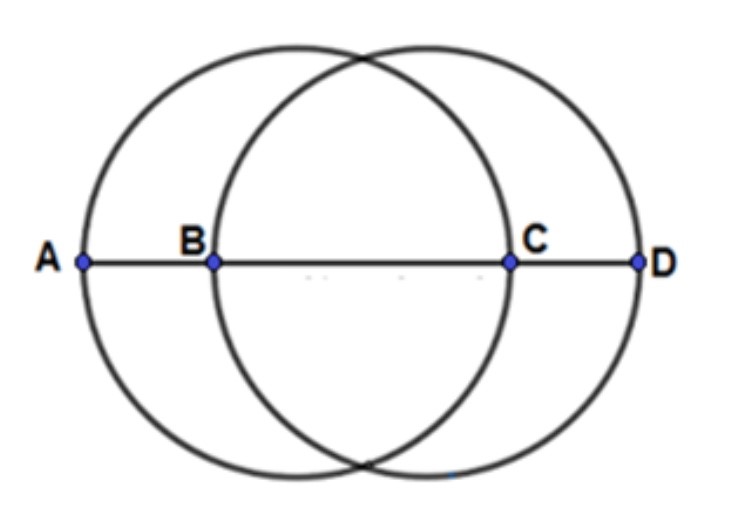
The diagram shows two overlapping circles of equal radii, r, say. The points A, B, C and D are collinear, and all lie on the line which passes through the centres of the circles.
If BC is not less than AB + CD,
then
what is the maximum-possible value for AD ÷ r ?
6. People don’t normally like going round in circles, but still…
…this next puzzle is actually lots of fun, too!! 😂
Imagine that the distinct positive whole numbers 2, 3, 4, 5, 6 and X are going to be placed in the six rings; one number per ring. The products of the numbers on each of the three edges of the triangular array are to be equal to each other, and will each be P, say.
What is the value of X?
Also, what is the maximum-possible value for P?
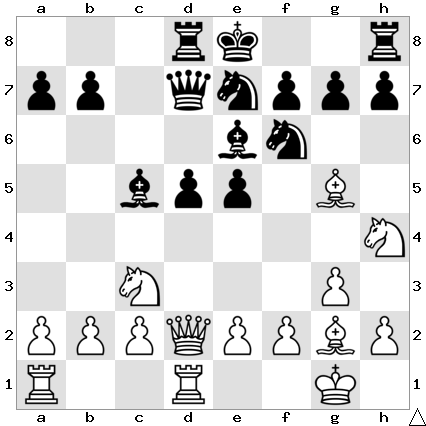
7. In Chess, Vipin and I both like playing the Caro-Kann Defence as Black. So, let’s now enjoy seeing it in action in a super-fast victory 😎 from Kiev in 1965, the year when Vipin was born. 💖
Mnatsakanian vs. Simagin, Kiev 1965.
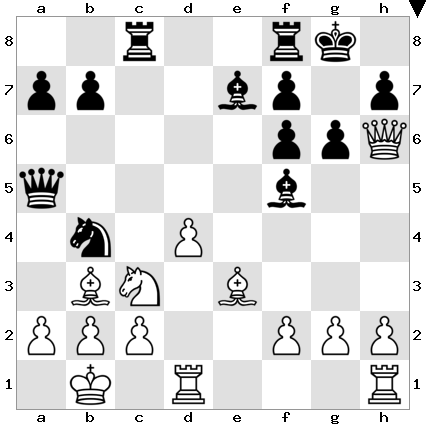
1 e4 c6 2 Nc3 d5 3 d4 dxe4 4 Nxe4 Nf6 5 Nxf6+ exf6 6 Bc4 (6 c3 followed by Bd3 is more popular nowadays) 6…Be7 (Several decades ago, super-GM Julian Hodgson told me that he likes 6…Qe7+, especially if White responds with 7 Be3?? or 7 Ne2?? which lose to 7…Qb4+! 😁) 7 Qh5 0-0 8 Ne2 g6 9 Qh6 Bf5 10 Bb3 c5 11 Be3 Nc6 12 0-0-0? (White’s king castles into an unsafe region where it will be attacked very quickly indeed…) 12…c4!! 13 Bxc4 Nb4 14 Bb3 Rc8 (the point of Black’s energetic pawn-sacrifice at move 12 has become clear along the opened c-file) 15 Nc3 Qa5 (also good is 15…b5, intending 16 a3 Rxc3!! 17 bxc3 Nd5 with an enduring attack for Black in addition to having enormous positional compensation for the sacrificed material) 16 Kb1? (It’s often difficult to defend well against a sudden attack, but this move simply loses by force; 16 Bd2 is more tenacious)
Get ready for a beautiful Chess combination! 😍
16…Rxc3! (16…Bxc2+! 17 Bxc2 Rxc3 also works) 17 bxc3 Bxc2+! 0:1. White resigned, in view of 18 Bxc2 Qxa2+ 19 Kc1 Qxc2# or 18 Kc1 Nxa2+ with decisive threats against the fatally exposed White monarch.
I’m pretty sure that Scott Fleming (who recently sent me a really nice letter from Arbroath, Scotland) will also enjoy that very neat, crisp win for Black, as will FIDE Master Craig SM Thomson, who has played lots of wonderful games with the Caro-Kann Defence for nearly 50 years already!! 👍😊
It’s my intention to publish solutions to all the puzzles around the time that blog post #153 comes out, God-willing as always.
In the meantime, please do feel free to send me your best solutions to any or all of the puzzles, if you like 😊.
I would like to round off this article now by most sincerely wishing you a very blessed weekend, with lots of happiness in everything that you do ❤.
Special congratulations to my friend James Pitts who has turned 53 today.
🎂💖😊
With kindest wishes as always,
Paul M😊twani ❤
“He has dethroned rulers and has exalted humble people.”
–Bible verse, Luke 1:52 ♥
P.S. = Puzzle Solutions (being posted on 4.4.2023)
459 ÷ 27 = 17, a prime number. Vipin’s favourite number is 27.
CREMONA → ROMANCE ! ♥
Note that VA + V(A+1) = VA(1+V). If V=4, then (1+v) = 5, and VA(1+V) will end with a digit zero. If V=5, then (1+v) = 6, and VA(1+V) will be even and will end with a digit zero (rather than a 5). If V=9, then (1+v) = 10, and again VA(1+V) will end with a digit zero.
If B and T represent the respective lengths (in metres) of the long bus and the tunnel, then (since t minutes is 60 times longer than t seconds), we can deduce that B+T = 60 x B and so T = 59 x B, a whole multiple of 59. The only such value for T between 900 and 1000 is 59 x 16 = 944. The tunnel is 944 metres long (and the length of the long bus is 16 metres).
If AD = L, then AB = AD – BD = L – 2r, and similarly CD = L -2r. Also, BC = L – 2(L-2r), which simplifies to 4r – L. So, for BC to be not less than AB + CD, we require that 4r – L ≥ 2 (L – 2r). That inequality can be simplified to 8r ≥ 3L, and so L/r ≤ 8/3. Therefore, if BC is not less than AB + CD, the maximum-possible value of AD ÷ r is 8/3.
The only possible value for X is 10, and a maximum-possible product of 120 along each edge can be achieved by putting the numbers 4, 6 and 10 in the corner positions. Then, place 3 between 4 & 10; place 2 between 6 & 10; place 5 between 4 & 6. The products P each become 120.
Out of the many millions of books that have ever been written, if I had to pick just 3–my absolute favourite number!–of them to keep enjoying forever, then my top selection would probably be the following:-
The Holy Bible, because it’s a perfect book revealing to us the Word of God, which can be trusted totally and is of supreme importance.
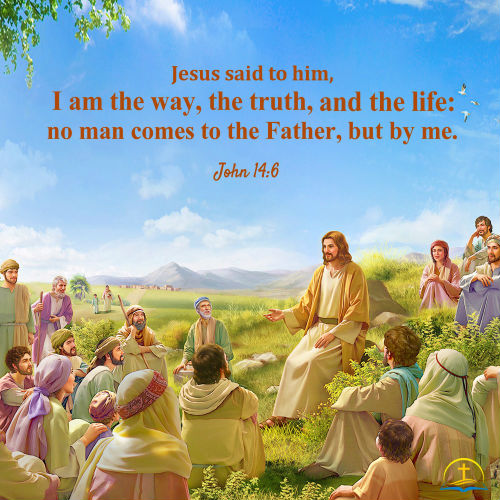
My selected text today is: Jesus said, “I am the way, the truth, and the life. No one comes to the Father except through me.”-John 14:6 ♥
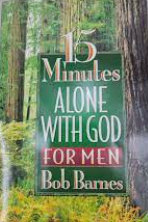
2. After my clear first choice above, it’s not at all easy for me to pick a second book in preference to all other books, but I’m sure that a very strong candidate would be: ’15 Minutes Alone With God’ by Bob Barnes.
Though the book has the subtitle ‘For Men’, every page has wonderful reflections for everyone. Here is a short extract from page 9 of my copy: “Time with your heavenly Father is never wasted. If you spend time alone with God in the morning, you’ll start your day refreshed and ready for whatever comes your way. If you spend time alone with Him in the evening, you’ll go to sleep relaxed, resting in His care, and wake up ready for a new day to serve Him.” ♥
If I fast-forward to pages 185-188 of the book, there’s a four-page article entitled I Didn’t Believe It Anyway, which includes the following powerful poem:
‘Twas thenight before Jesus came and all through the house
Not a creature was praying, not one in the house.
Their Bibles were lain on the shelf without care
In hopes that Jesus would not come there.
The children were dressing to crawl into bed,
Not once ever kneeling or bowing a head.
And Mom in her rocker and baby on her lap
Was watching the Late Show while I took a nap.
When out of the East there arose such a clatter,
I sprang to my feet to see what was the matter.
Away to the window I flew like a flash
Tore open the shutters and threw up the sash!
When what to my wondering eyes should appear
But angels proclaiming that Jesus was here.
With a light like the sun sending forth a bright ray
I knew in a moment this must be THE DAY!
The light of His face made me cover my head.
It was Jesus! Returning just like He had said.
And though I possessed worldly wisdom and wealth,
I cried when I saw Him in spite of myself.
In the Book of Life which He held in His hand
Was written the name of every saved man.
He spoke not a word as He searched for my name;
When He said, “It’s not here,” my head hung in shame.
The people whose names had been written with love
He gathered to take to His Father above.
With those who were ready He rose without a sound
While all the rest were left standing around.
I fell to my knees, but it was too late;
I had waited too long and thus sealed my fate.
I stood and I cried as they rose out of sight;
Oh, if only I had been ready tonight.
In the words of this poem the meaning is clear;
The coming of Jesus is drawing near.
There’s only one life and when comes the last call
We’ll find that the Bible was true after all!
3. No further book is really needed, but still I thank God every day for having let me enjoy many thousands of fascinating puzzles in my life so far. For me, a compilation of all those puzzles, about Chess, Mathematics, Words and more, would certainly be a treat! I believe that the puzzles in store in Heaven will be better and more magical than I can possibly imagine. For the moment, I can only offer what I know right now. So, I would like to share some surprises with you, since God gives us good thoughts to be shared. Here comes fresh puzzle ideas that came yesterday evening and in the morning today…with some extra bonuses this evening!
I would like to specially dedicate the puzzles to my excellent colleague Jens Van Steerteghem, his brother Nick, and their father Eric, as all three gentlemen are passionate about puzzles and have great talent for solving them!
Get ready for a race…but first rearrange the letters of TIME RAN to make a seven-letter female first name, the nice name of Jens & Nick’s mother 😊. A wee clue is that her name begins with MA, and it’s a very popular name in Belgium 😊.
A SNEAKY SPEED BRAINTEASER 😊♥😊
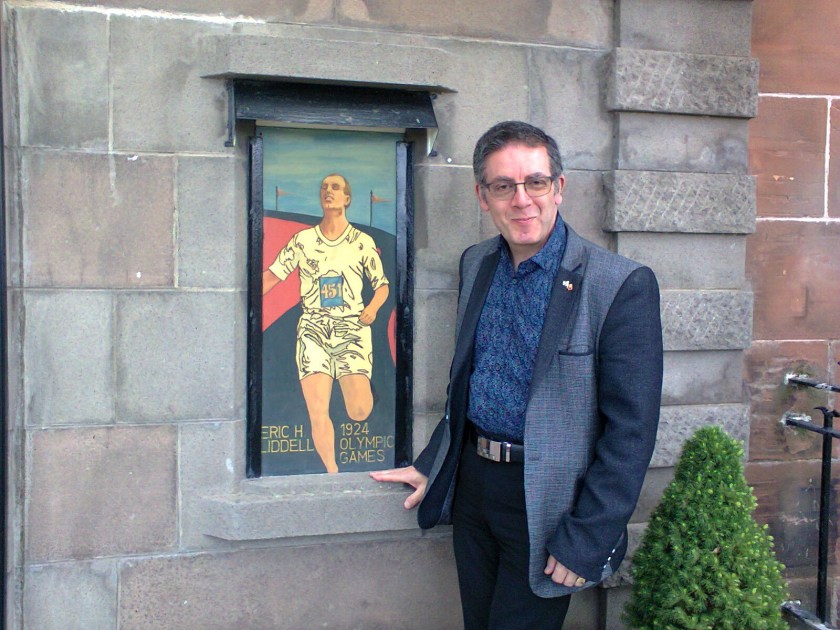
The name ‘Eric’ always makes me think of the famous missionary Eric Liddell–affectionately known as ‘The Flying Scotsman’–who won the Gold Medal in the 400m race at the 1924 Paris Olympics. Fast-forwarding 99 years to the present 2023…imagine that Eric Van Steerteghem runs a long distance from A to B at an average speed of 3 metres per second. On the way back from B to A (following exactly the same route as before, only in the opposite direction, and naturally more tired than before), Eric’s average speed is 2 metres per second.
The brainteaser is to figure out Eric’s average speed for his entire run from A to B to A. (Being an expert in Physics, Mathematics and more, Jens could tell you immediately that the average speed will not be 2.5 metres per second! Can you do like Jens and figure out the correct value?)
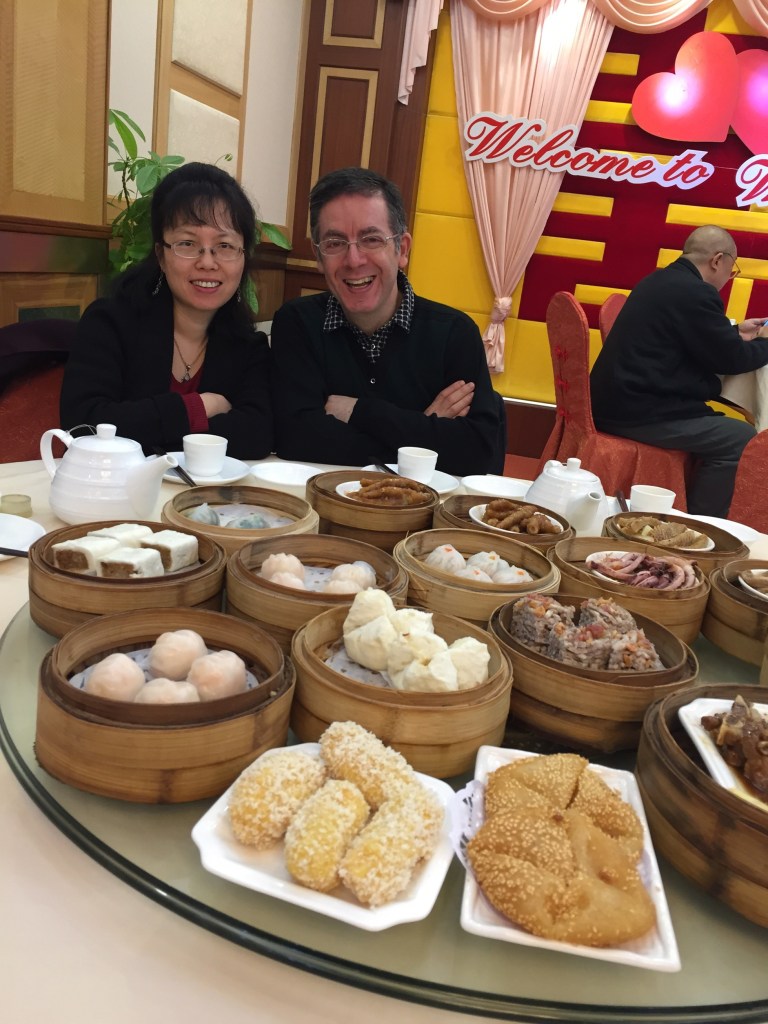
CHINESE FOOD WORD PUZZLE 😊♥😊
Thinking of delicious Chinese food… rearrange the letters of PRC CALORIES to make a proper 11-letter English word!
CUBOID BRAINTEASER 😊♥😊
Part 1: As a very quick warm-up before the main Part 2, imagine a cube with its dimensions (equal length, width and height) in centimetres (cm).
If a particular cube’s volume (in cubic centimetres) is numerically equal to its total surface area (in square centimetres), then what must be the cube’s exact dimensions?
Part 2: If the length, width and height of a certain cuboid are all exact whole numbers of centimetres, and if the cuboid’s volume (in cubic centimetres) is numerically equal to its total surface area (in square centimetres), then what is the maximum possible height of the cuboid?
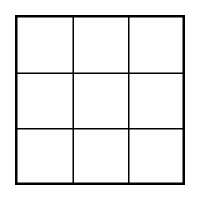
Your super-fun brainteaser challenge is to find nine different positive whole numbers to fill the nine grid boxes (with one number per box) so that the total product (when you multiply all the nine numbers together) will be 1000000000 = 1 billion. Also, the mini-products of the three numbers in any row or in any column or in either of the two main diagonals should always give the same results in each of those eight cases. That is: three row products, three column products & two main diagonal products must all equal each other.
RECIPROCALS BRAINTEASER 😊♥😊
For this puzzle, we need to know that, in Mathematics, the reciprocal of any non-zero number n is 1 ÷ n.
Imagine that a lady on her birthday today said, “The difference between the reciprocal of my new age now and the reciprocal of the age I’ll be in a year from now is equal to the reciprocal of the year when my younger sister was born.”
Your brainteaser is to figure out the lady’s new age now, and figure out the exact year when the lady’s younger sister was born.
You know that I like the number 141, as it features in one of my email addresses, pmotwani141@gmail.com. Here in blog post #146, I should give a special mention to the number 14641, which equals the fourth power of my house number 11 😊
146 BRAINTEASER 😊♥😊
Part 1: In our normal base ten, the number 146 = 6 x 1 + 4 x 10 + 1 x 10 squared.
However, in another base B (not base ten), 222 (base B) = 146 (base 10).
Figure out the value of B.
Part 2: This involves a new base, N. We are told that
222 (base N) = xyz (base 10),
where xyz represents a proper three-digit whole number.
The brainteaser is to figure out the maximum possible value of xyz, and the corresponding value of N.
A Wee Dose of Chess To Finish! 😊♥😊
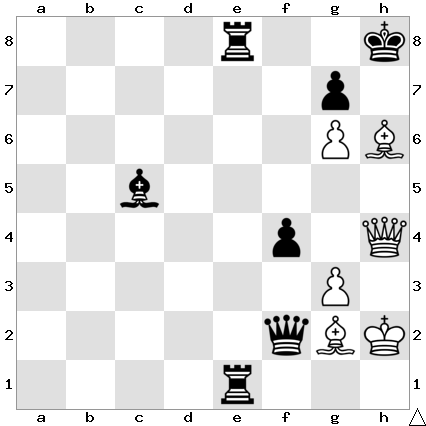
Part 1: Though White is down on material, it’s White to play and win. Part 2: If it were actually Black to play, what would be the strongest move?
It’s my intention to publish solutions to all the puzzles around the time that blog post #147 comes out, God-willing as always.
In the meantime, please do feel free to send me your best solutions to any or all of the puzzles, if you like 😊.
I would like to round off this article now by most sincerely wishing you a very blessed weekend, with lots of happiness in everything that you do ♥
With kindest wishes as always,
Paul M😊twani ♥
P.S. = Puzzle Solutions!
TIME RAN = MARTINE
Eric’s average speed for the entire run was 2.4 metres per second. That can be verified using the formula Average Speed = 2vw ÷ (v+w), in which v=3 and w=2, the respective speeds for the outward and return runs covering equal distances.
PRC CALORIES can turn one’s diet upside down because they make RECIPROCALS !! 😊
Regarding length L, width W and height H, when a cube has L = W = H = 6cm, then its volume = 6 x 6 x 6 = 216 cubic centimetres, and the total surface area of its six faces is 216 square centimetres because each one of the faces has an area of 6 x 6 = 36 square centimetres.
In the cuboid part of the brainteaser, a maximum whole number height of 42cm is achievable when the length and width are 3cm and 7cm in either order.
Given that the volume was numerically equal to the total surface area, I used LWH = 2LW + 2LH + 2WH and then 1 = 2/H + 2/W + 2/L.
Letting L=3 helps to ‘use up’ two thirds of the 1, leaving only one third or 2/6. So W can’t then be 6, but it can be 7, letting us solve directly for the optimal H.
(If the length and width are 4cm and 5cm in either order, we would find that H = 20cm; smaller than our optimal 42cm.)
In the Multiplication Magic Square, we must have the number 10 in the central box, and all the other factors of one hundred can be filled in the rows in (for example) this order (starting from the top-left box):- 20, 1, 50; 25, centre 10, 4; 2, 100, 5.
In the reciprocals brainteaser, the lady is 44 and her younger sister was born in the year 1980.
It makes use of the fact that 1/n – 1/(n+1) = 1/(n(n+1)). In the puzzle, n(n+1) has to be the year when the younger sister was born. The only value for n that gives a suitable value for n(n+1) in the reasonably recent past is n=44, and then n(n+1) = 44 x 45 = 1980.
In the number bases brainteaser, 222 (base N) has the value of 2 + 2 x N + 2 x N squared. If you were to generate an accurate table of different values for N and the corresponding values of 2 + 2 x N + 2 x N squared, it would show, for example, that 2 + 2 x N + 2 x N squared = 146 when N = 8 and 2 + 2 x N + 2 x N squared = 926 when N = 21 and 2 + 2 x N + 2 x N squared = 1014 when N = 22.
So, the answers asked for in the puzzle are:- B = 8; xyz = 926; N = 21.
In the Chess puzzle, 1 Bg5+ Kg8 2 Qh7+ Kf8 3 Qh8# is the fastest win for White.
If it were actually Black’s turn to move, then (though it’s true that 1…Qxg3+ would win easily) the quickest forced win is 1…Rh1+! 2 Kxh1 Qg1#, a key checkmating pattern 😊
Whether we have already met yet, or not, I think of you as a VIP because we are all children of God, and that automatically makes you a Very Important Person indeed.
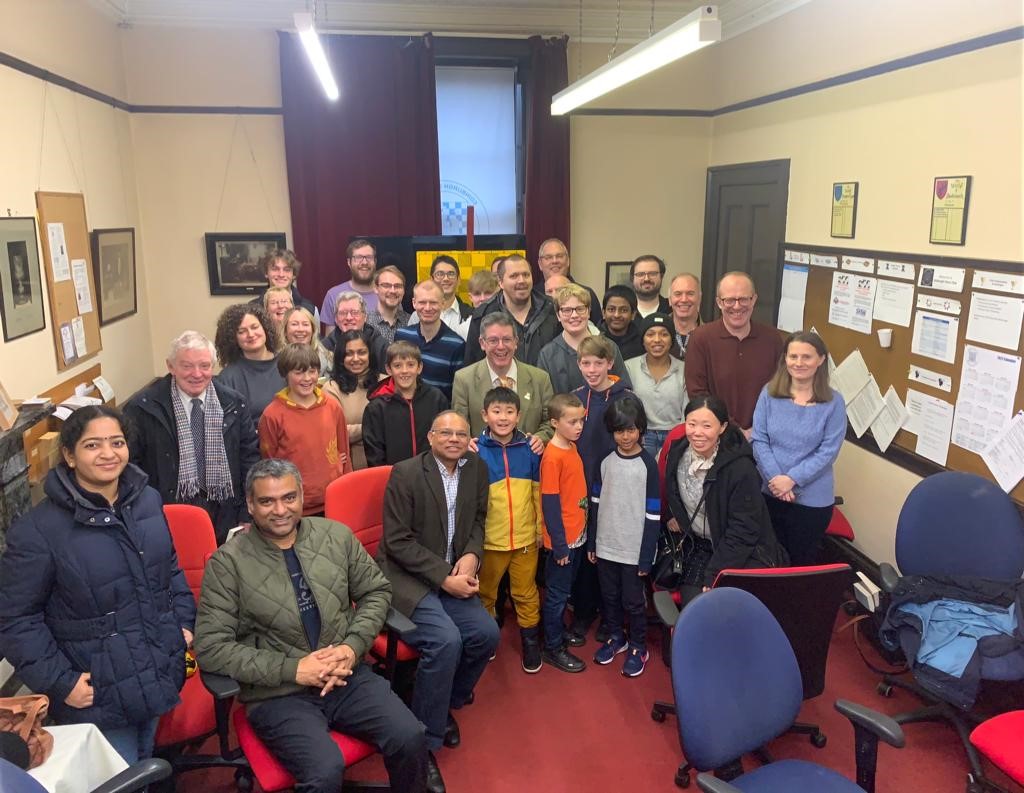
Everyone who took part in a fun chess talk/’simul’ at Edinburgh Chess Club three days ago (in early celebration of the club’s 200th anniversary coming three days from now), received lovely prizes such as books, magazines and chocolates to let them all feel like the VIPs that they truly are ♥
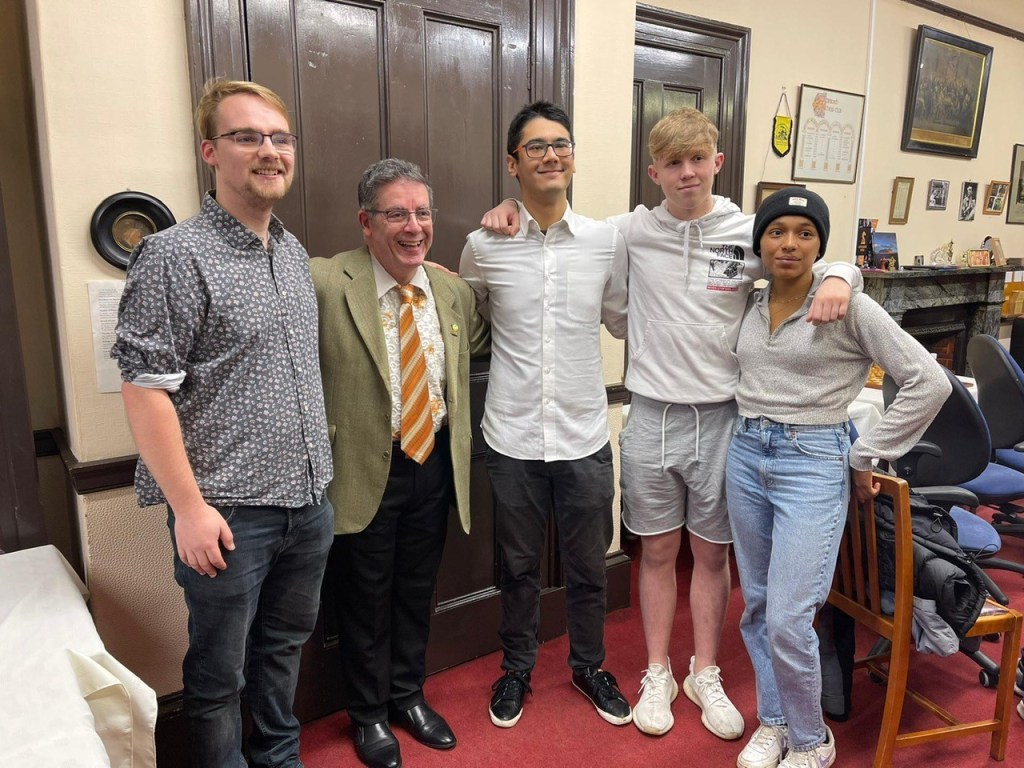
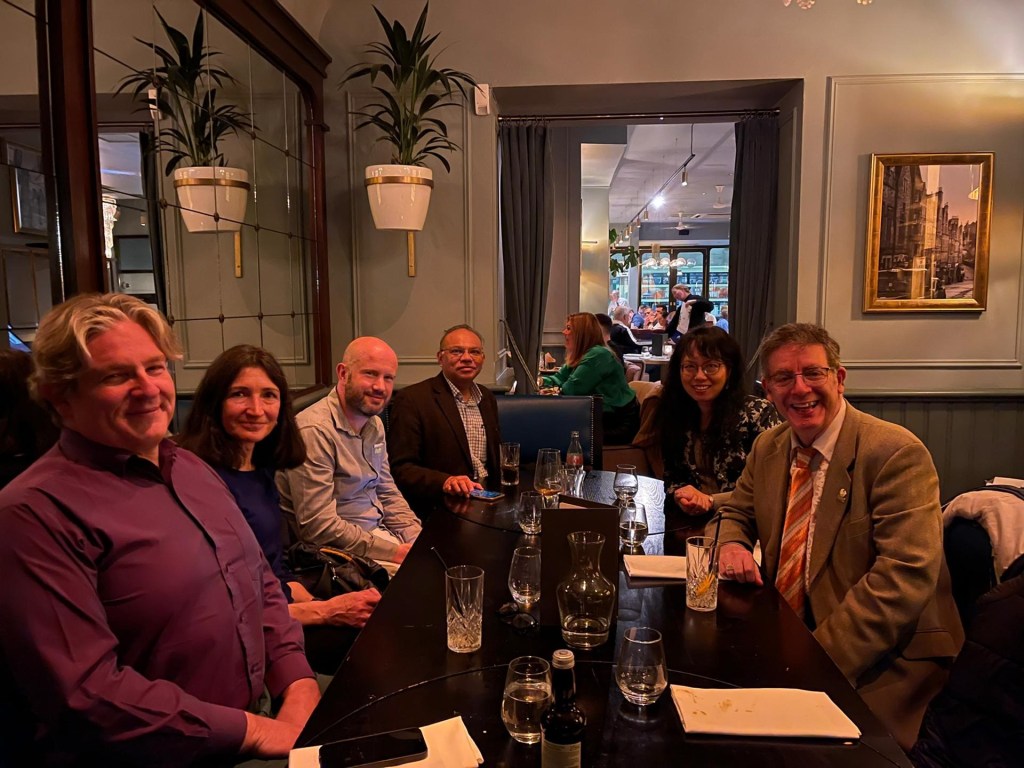
Thanks to Sue Loumgair, Dr. Vipin Zamvar, Ian Whittaker and FM Neil Berry (the President of Edinburgh Chess Club) for having sent nice photos from the event.
Dr. Vipin Zamvar is a really good-hearted gentleman who was particularly kind to my family during our final evening in Edinburgh ♥
In addition to enjoying seeing very long-time friends Lindsay McGregor, David Montgomery, FM Craig Thomson, FM Neil Berry, Jonathan Grant, GM Keti Arakhamia-Grant & their daughter Elena Grant, it was lovely to get to make many new friends during the club’s joyful celebrations 😊😊
I would like to thank all who attended the chess talk for being a wonderfully receptive audience, and I congratulate everyone from the ‘simul’ for playing so many good moves. Special congratulations to Warrick Campbell and Neil Irving for taking full advantage of their opportunities and playing better than I did!
The title of ‘Funniest Chess Friend in Edinburgh’ probably has to go to Craig Thomson! He knows that 3 is my favourite number, but as I hadn’t seen him for 13 years (since 2009 !) and as his email address contains the number 17, I offer these amusing thoughts…I was obliged to score 17/19 in your honour, Craig…and also 1303 x 3 x 3 x 17 = 199359 in recognition of the fact that the club was precisely 199 years & 359 days old when we met three days ago! 😊😊
I promised Lindsay McGregor that I would publish the moves of a personal game that I also shared during the chess talk, as he was very interested in that game. Here it is:-
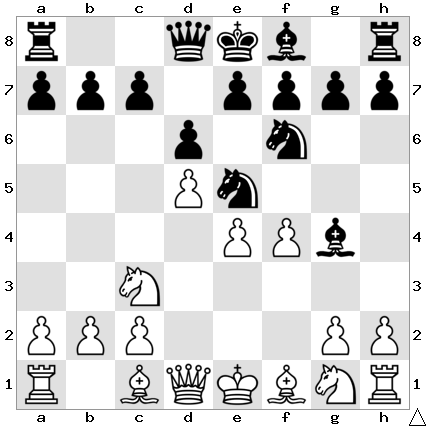
P.A.Motwani vs. My Computer (Training Game played at home on 27.8.2022)
Here now is a selection of positions that occurred in the ‘simul’. In each case, it’s White to play and win.
At the moment, I can still recall the moves from the 19 games in the ‘simul’. After a while, I will probably forget some of the details, but I will always treasure having met all the lovely people at the club ♥
Chess Position Solutions
White obtained a decisive advantage via 1 Bxf6 gxf6 2 Qh6 f5 3 Qf6.
White obtained a decisive material advantage via 1 Qd2 Ned7 (1…Ng6 2 f5 Ne5 3 h3 Bh5 4 g4 also traps Black’s queen’s bishop) 2 h3 Bh5 3 g4.
White won with 1 Rxd7 Re4 (or 1…Qxd7 2 Qh6) 2 Rc7 intending 2…Rxh4 3 Rxc6 or 2…Qxc7 3 Qh6 or 2…Qd6 3 Qxe4.
White won with 1 Nxd5, intending 1…exd5 2 Rxe8+ Qxe8 3 Bxf6 gxf6 4 Qxd5+.
After all that chess, let’s round off with a nice wee dose of Maths here in Blog Post #137…
Not only is 137 a prime number, but so is 13, 17 and 37. 137 is the smallest whole number with digits possessing such properties!
In honour of Edinburgh Chess Club’s 200th anniversary, 200 is the smallest whole number which cannot be made prime by changing one of its digits.
I would like to wish everyone a very happy All Saints Day now on 1 November ♥
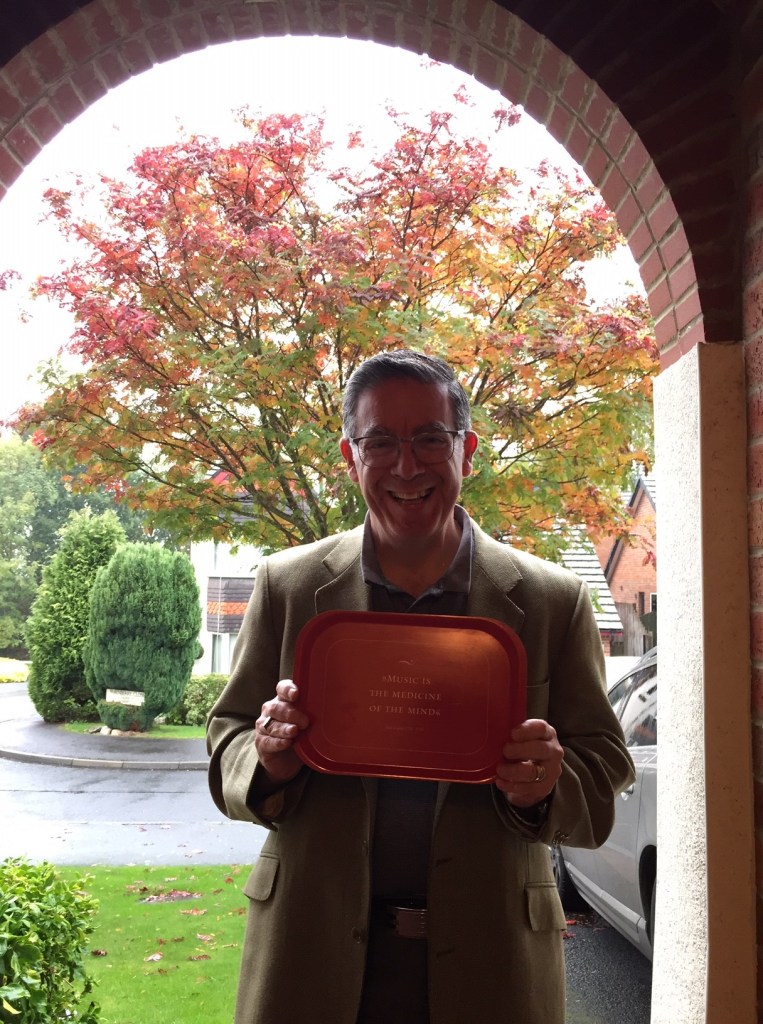
As there must surely be lots of singing in Heaven, the saying “Music is the Medicine of the Mind” comes happily to mind ♥
I am delighted to have won the British Senior (Over 50) Chess Championship jointly with Chris Duncan and Philip Crocker at the Riviera International Centre in Torquay.
Philip Crocker and me, joint winners of the British Senior (Over 50) Chess Championship (with Chris Duncan who had to leave a bit earlier). Afterwards, Philip and I had a happy interview with WIM Natasha Regan and GM Matthew Sadler, friends of mine from long ago. This British Championship was a very precious event, not only for getting to enjoy good chess, but also for seeing dear old friends again and making many new ones. I would like to thank all the organisers, arbiters, players and Chessable (the principal sponsor) for a most memorable event ♥☺♥.Continue reading “Blog Post #130: British Senior (Over 50) Chess Champions and Unforgettable Friends ♥☺♥”
Thinking back more than 40 years to my high-school days in Dundee, Scotland, one of my jolly friends there was nicknamed ‘Happy’, and that’s exactly how he has always been to me and, I believe, to everyone who knows him. I received a very kind message from ‘Happy’ last month when I turned 60, and he sent another lovely message to wish Jenny and myself a happy 27th wedding anniversary yesterday ♥😊😊♥
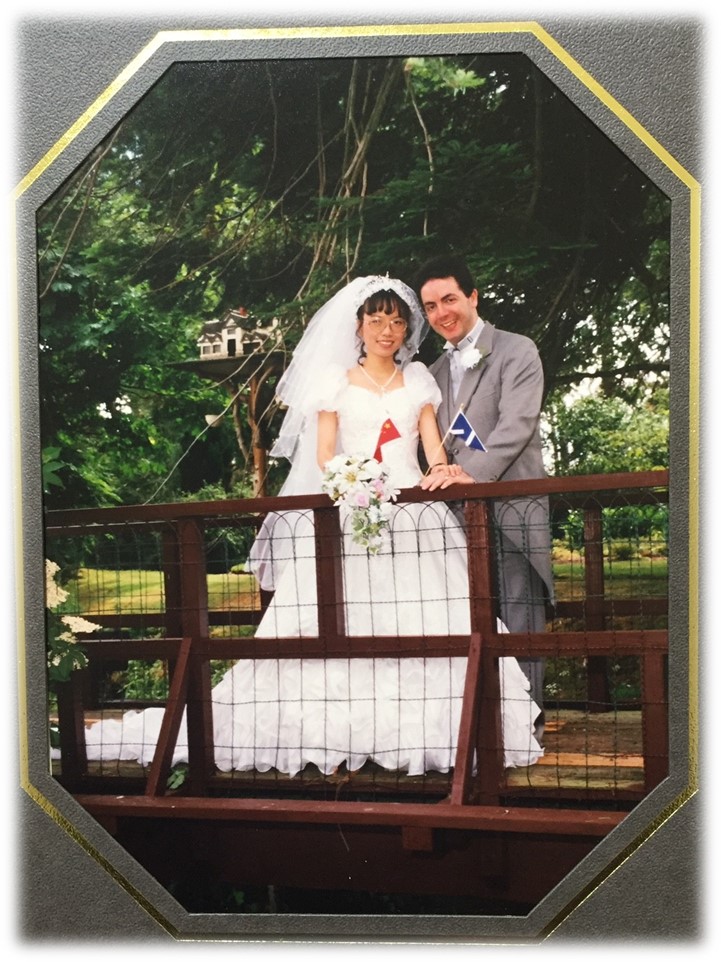
Jenny & Paul’s Wedding Day, 27 years ago ♥😊😊♥
One of my favourite, beautiful word facts is that I was born makes rainbows, and now I like to think of S.M.I.L.E.S. as standing for Sixty May I Love Everyone Sincerely. A couple of my favourite sayings are, “If you see someone without a smile, give them one of yours” and “Your smile is a signature of God on your face.”
Photo of Paul taken by Jenny yesterday evening inside our favourite Kinepolis cinema!😊
Smiles could be seen everywhere at Musica Mundi School last week, as the leaders, teachers, staff, students, parents and many other dedicated supporters helped the school to complete its fourth wonderful year, so far.
I have a fresh puzzle for you, inspired by the nice photo below…
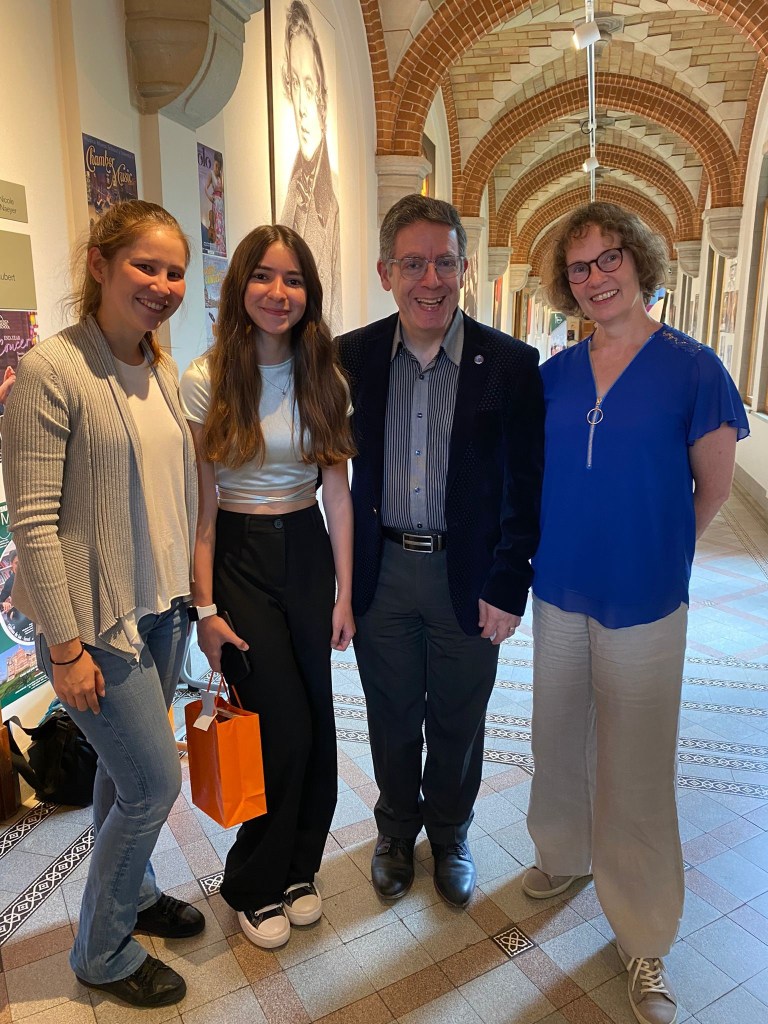
Paul with two great colleagues and a super student at Musica Mundi School 😊😊😊😊
Imagine that the four of us in the photo are thinking of positive whole numbers with the following special properties:-
The two ladies are thinking of the same number as each other;
the student is thinking of the largest number of any of us;
my number is the exact average (or ‘arithmetic mean’) of all of our numbers;
and now the most revealing, key fact: the sum obtained by adding up the four numbers exactly equals the product obtained by multiplying the four numbers together!
Your fun challenge is to figure out exactly what numbers each of the four of us must be thinking of to fit the wee ‘Maths st😊ry’.
The magical photo below by Erika Sziva encourages good, deep thinking…
A magical moment captured beautifully in this photo by Erika Sziva ♥😊♥
In between my 60th birthday and 27th wedding anniversary, Jenny and I went for a weekend to celebrate with friends living in a Dutch village with the perfect name: it’s called Best! Our dear friends there are literally NEAR, as their names are Nico, Erika, Alex & Robert 😊😊😊😊
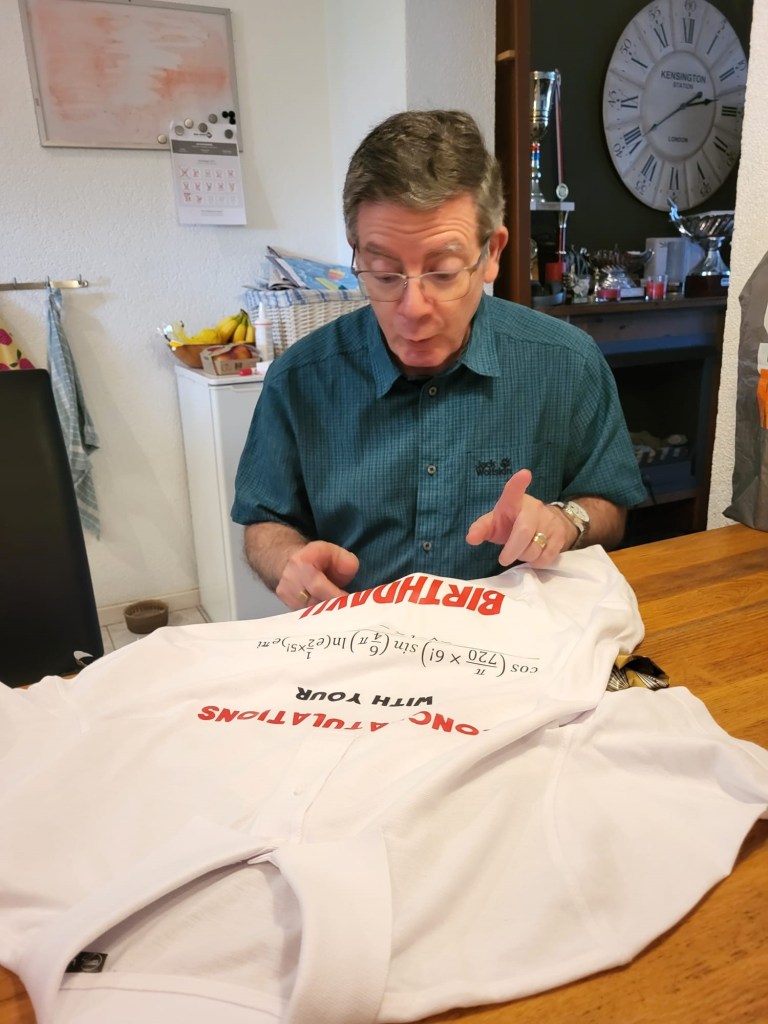
Nico gave me a T-shirt with some amazingly creative mathematical expressions printed on it!
Robert and Erika’s sites are a treasure trove for chess boards, pieces, books, computers, software and delightful gift items such as chess socks, T-shirts, ties, cufflinks, pin badges, bracelets, keyrings and USB storage in the form of a chess king. You’ll also find some goodies relating to the game of draughts. Robert (an IT expert) & Erika (a WGM=Woman Chess Grandmaster) are renowned for their very fast, efficient and friendly service.
Let’s round off this article with a lovely chess puzzle.
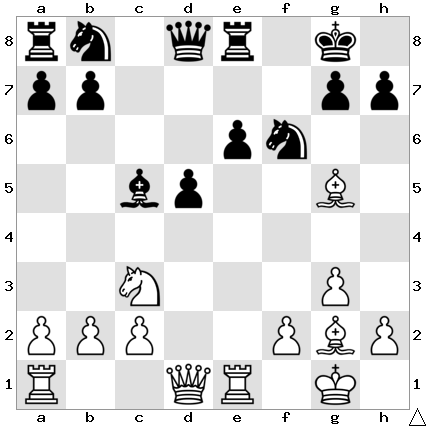
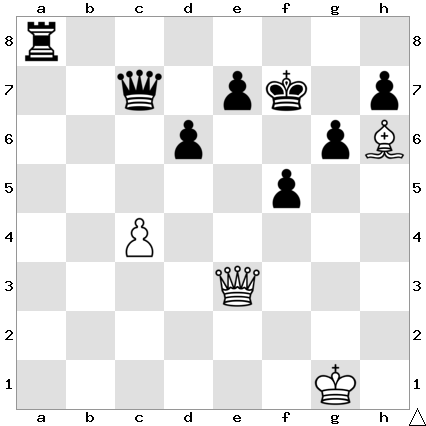
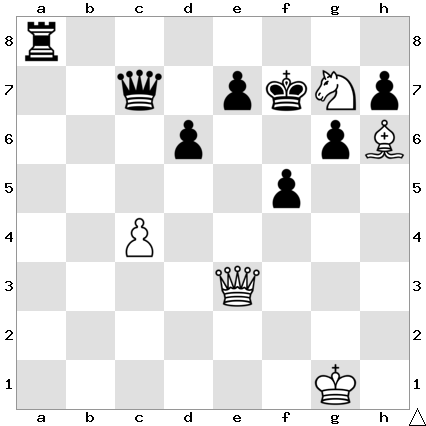
Place an invisible white knight somewhere on the board so that it will then be White to play and force checkmate in four moves ♥😊😊♥
The most important thing I have learned in my life is that God loves us all.
I wish you a very happy day now.
Paul M😊twani ♥ xxx
P.S. = Puzzle Solutions
In the number puzzle, 1 + 1 + 2 + 4 = 8 = 1 x 1 x 2 x 4.
The ladies thought of 1; the student thought of 4; I thought of 2.
In the chess puzzle, white’s invisible knight is NOT on c5, because then checkmate could be forced too quickly with 1 Qe6+ Ke8 2 Qg8#;
rather, the invisible knight is on g7, which leads to
The forced checkmate in 4 moves is 1 Qe6+ Kf8 2 Nh5+ Ke8 3 Nf6+ Kd8 4 Qg8# ♥





























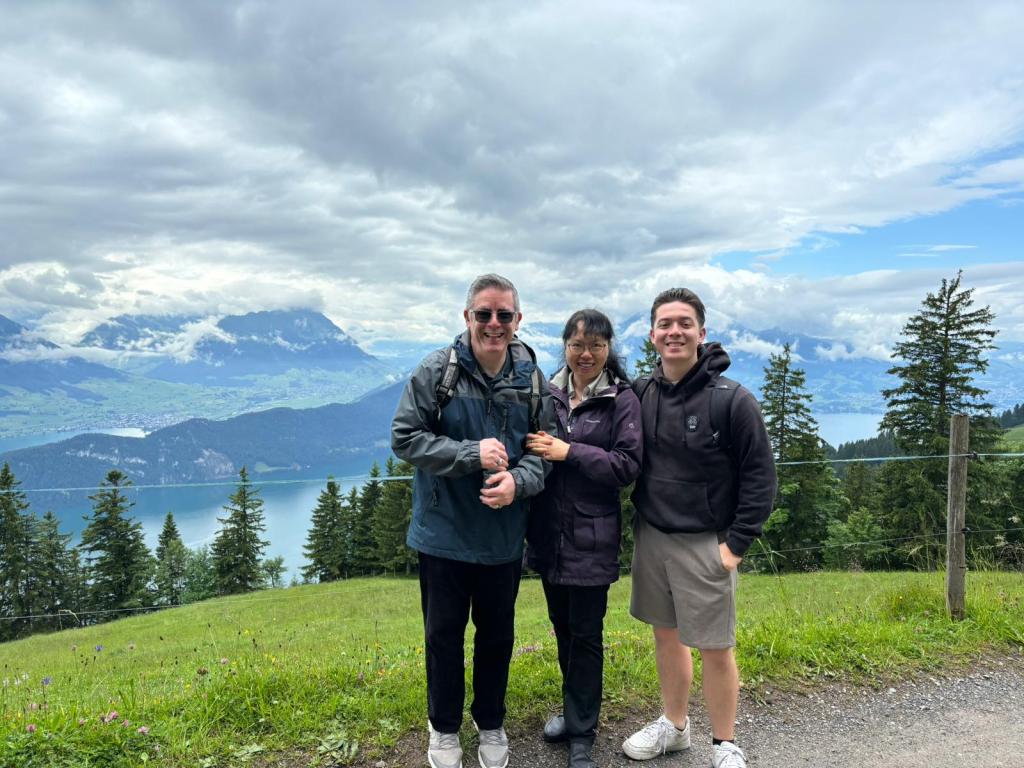





















 Paul Motwani